
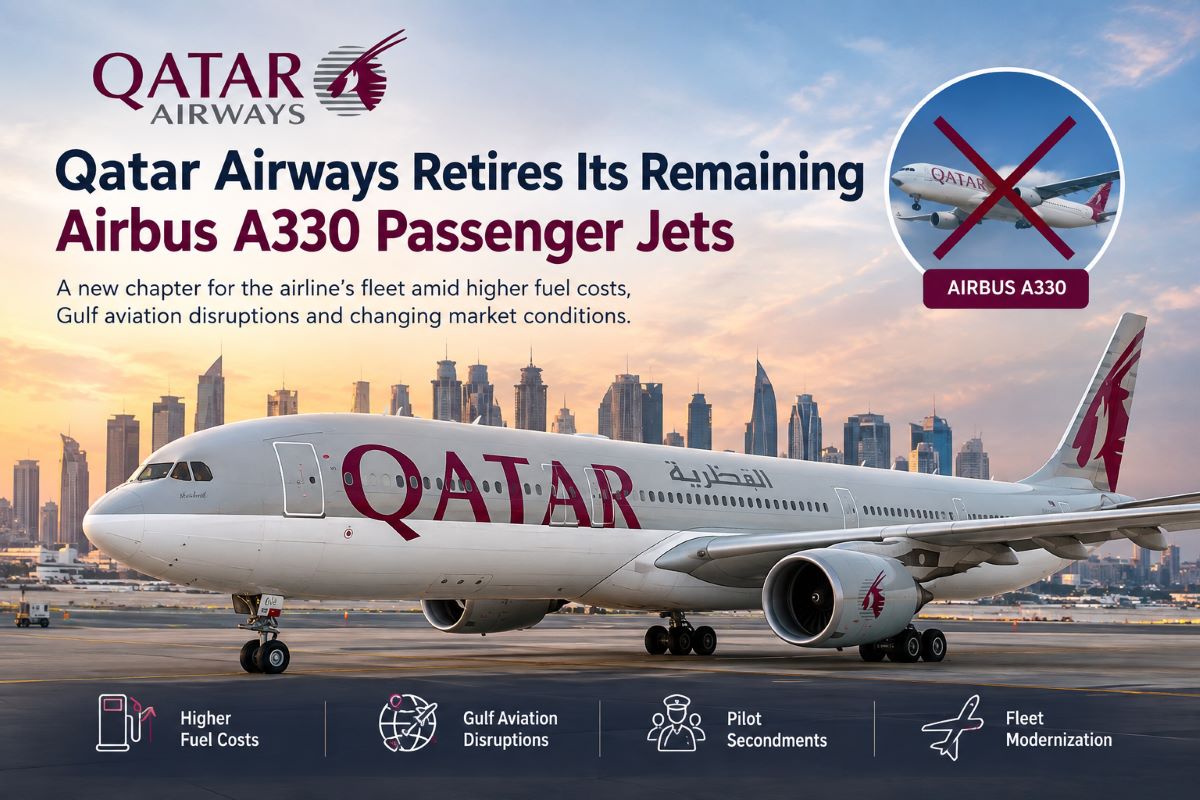
Qatar Airways retires Airbus A330 passenger jets as the airline continues to adjust its fleet during a challenging period for Gulf aviation. The retirement comes as higher jet-fuel prices, reduced aviation activity and regional disruptions linked to the Iran war put additional pressure on airlines. Qatar Airways has also seconded some pilots to RwandAir, highlighting how the changing operating environment is affecting not only aircraft but also airline staffing and capacity.
Why Did Qatar Airways Retire Its Remaining Airbus A330s?
The Role of Fleet Economics:The Qatar Airways A330 retirement reflects the wider economics of operating older widebody aircraft. As aircraft age, maintenance requirements can increase, while newer models generally offer better fuel efficiency and updated technology. For a global carrier, decisions about the Qatar Airways fleet involve balancing operating costs, passenger demand, maintenance needs and the availability of newer aircraft.
Impact of Higher Jet-Fuel Prices: Fuel prices are particularly important for airlines because jet fuel represents a major operating expense. When fuel becomes more expensive, airlines have greater incentive to use aircraft that can deliver similar capacity with lower fuel consumption. This helps explain why fleet efficiency has become an important consideration for Qatar Airways Airbus A330 operations.
What Happened to Qatar Airways’ A330 Passenger Fleet?
Qatar Airways’ Airbus A330 History: The Airbus A330 has been an important part of Qatar Airways’ long-haul fleet for many years, serving passengers on international routes. The twin-engine widebody aircraft became widely used by airlines because of its range, capacity and versatility. Qatar Airways’ passenger A330 fleet should also be distinguished from any other A330-related operations or aircraft arrangements.
Retirement of the Remaining Passenger Aircraft: With the retirement of its remaining A330 passenger aircraft, Qatar Airways is moving further toward a fleet centered on newer-generation widebody jets. The decision is significant because it closes another chapter in the airline’s use of the type while reflecting changing aircraft economics across the industry.
How Is the Iran War Affecting Gulf Aviation?
Flight and Airspace DisruptionsThe conflict has created wider challenges for Gulf airline disruptions, with regional airspace conditions affecting flight planning and operations. Airlines may need to adjust routes, schedules and aircraft utilization when operating conditions change quickly.
Reduced Aviation ActivityRegional uncertainty can also influence passenger demand and overall aviation activity. For carriers operating extensive international networks, these changes can make flexible fleet and crew management increasingly important.
Why Did Qatar Airways Second Pilots to RwandAir?
Managing Pilot Resources: The reported Qatar Airways pilots RwandAir arrangement shows how airlines can use secondments to manage crew resources when operational requirements change. Instead of leaving trained pilots underutilized, temporary placements can help airlines and employees maintain valuable operational capacity.
What Aircraft Will Replace Qatar Airways’ A330s?
A More Modern Widebody Fleet: Qatar Airways operates newer aircraft including the Airbus A350, Boeing 787 Dreamliner and Boeing 777 families. These aircraft provide different combinations of range, capacity and fuel efficiency, giving the airline more flexibility as it manages its network and responds to changing operating costs.
Will the A330 Retirement Affect Passengers?
Possible Flight and Aircraft Changes : The Qatar Airways flight disruptions associated with regional conditions should not automatically be attributed to the A330 retirement. Passengers may instead see different aircraft assigned to particular services as the airline adjusts capacity. Travelers should check their individual booking for the latest aircraft and schedule information.
How Is the Iran War Affecting Gulf Aviation?
Airspace and Flight Disruptions: The conflict has created additional challenges for Gulf aviation, particularly when airspace restrictions or security concerns affect normal flight routes. Airlines may need to reroute aircraft, change schedules or use longer flight paths, which can increase operating time and fuel consumption. These conditions can also make aircraft utilization more difficult as carriers adjust their networks to changing regional circumstances.
Lower Aviation Activity: Changes in regional travel conditions can also affect demand and airline capacity planning. When Gulf airline disruptions continue, carriers may need to review how many flights they operate on certain routes and how aircraft are allocated across their networks. This makes flexible fleet management increasingly important, particularly for airlines operating large international fleets.
Rising Fuel Costs: Higher jet-fuel prices add another layer of pressure for airlines. Fuel is a major operating expense, so increased prices can influence decisions about which aircraft are most economical to operate. More fuel-efficient aircraft can become particularly valuable when fuel costs rise, making fleet efficiency an important consideration alongside passenger demand and route requirements.
Why Did Qatar Airways Second Pilots to RwandAir?
What Is a Pilot Secondment?: A pilot secondment is a temporary arrangement in which an airline’s employee works for another airline while remaining connected to their original employer. Airlines can use this approach when staffing requirements change, helping trained pilots continue working while operational needs are being adjusted.
Why RwandAir?: The reported arrangement involving Qatar Airways pilots and RwandAir provides an example of how airlines can manage crew resources during changing market conditions. Secondments can help make use of experienced pilots when an airline temporarily has fewer operational requirements, while the receiving carrier gains access to qualified aviation professionals without making the arrangement permanent.
What Aircraft Will Replace the Qatar Airways A330?
Qatar Airways’ Newer Widebody Fleet: Qatar Airways already operates several newer-generation widebody aircraft, including the Airbus A350, Boeing 787 Dreamliner and Boeing 777 families. These aircraft serve different roles across the airline’s international network, depending on route length, passenger demand and required capacity. However, a specific aircraft should only be described as replacing an A330 on a particular route when that assignment has been confirmed.
Why Newer Aircraft Matter: New-generation aircraft can offer improvements in fuel efficiency, range, cabin technology and passenger comfort. For a major international carrier, these advantages can support more efficient operations while providing flexibility across different routes. The shift away from older aircraft can therefore form part of a broader Qatar Airways fleet strategy focused on operating economics and long-term network requirements.
Will Qatar Airways’ A330 Retirement Affect Passengers?
Could Flight Schedules Change?: The retirement of Qatar Airways’ remaining A330 passenger aircraft could lead to aircraft swaps, capacity changes, or adjustments to some flight schedules as the airline reallocates its newer aircraft across its network. However, an aircraft retirement does not automatically mean that routes will be cancelled. The actual impact can vary depending on passenger demand, aircraft availability, and operational requirements.
Will Passengers Notice a Difference?: Passengers may notice differences if their flight is operated by a different aircraft. Changes could include cabin configuration, seat availability, onboard facilities, and the overall in-flight experience. Travelers should also remember that the aircraft type displayed when booking can sometimes change before departure because airlines regularly adjust aircraft assignments for operational reasons.
Should Travelers Be Concerned?: The Qatar Airways A330 retirement does not by itself indicate widespread cancellations or major disruption for passengers. Most travelers should focus on their individual booking and check for any schedule, aircraft, or seat changes before departure. Qatar Airways passengers can use their booking details or the airline’s official channels to confirm the latest information about their flight.
What Does the A330 Retirement Mean for Qatar Airways?
A Shift Toward a Modern Fleet: Retiring older passenger aircraft is part of a broader move toward a modern widebody fleet. Newer aircraft can provide improved fuel efficiency, updated cabin features, longer-range capabilities, and potentially lower operating costs. For Qatar Airways, fleet modernization can support long-term planning while allowing the airline to match aircraft capacity with different international routes.
Qatar Airways and Changing Gulf Aviation Conditions: The decision also comes as Gulf aviation continues to face changing operating conditions, including fuel prices, regional disruption, passenger demand, and aircraft utilization. These factors can influence how airlines deploy their fleets and manage capacity. For Qatar Airways, maintaining a flexible and efficient fleet can help the carrier respond to changing market conditions while continuing to serve its international network.
What Does This Mean for the Wider Airline Industry?
Airlines Are Reassessing Fleet Costs: Airlines are paying closer attention to fuel efficiency, maintenance expenses, and aircraft utilization when making fleet decisions. Older aircraft can remain useful, but rising operating costs may encourage carriers to consider newer, more efficient alternatives when planning their long-term fleets.
Gulf Airlines Face Regional Disruptions: Gulf carriers are also operating in a challenging environment shaped by airspace issues, fuel-price pressure, and changing international travel patterns. Regional disruptions can affect flight routes, schedules, aircraft utilization, and capacity planning, requiring airlines to adjust operations as conditions change.
Older Aircraft May Face Greater Pressure: Older widebody aircraft can face increasing pressure when maintenance requirements and operating costs are compared with newer alternatives. This does not mean every older aircraft will be retired immediately, but factors such as operating economics, maintenance needs, fuel consumption, and newer aircraft availability can influence future fleet decisions.
Key Facts About Qatar Airways’ A330 Retirement
| Question | Answer |
| What aircraft was retired? | Airbus A330 passenger aircraft |
| Which airline retired them? | Qatar Airways |
| Why is the move significant? | It marks the retirement of the airline’s remaining A330 passenger operations |
| What factors are involved? | Fleet economics, fuel costs, and changing aviation activity |
| Is the Iran war relevant? | Regional disruption has affected Gulf aviation conditions |
| What happened to some pilots? | Some Qatar Airways pilots were reportedly seconded to RwandAir |
| Will every Qatar Airways flight be affected? | No. Aircraft assignments depend on individual routes and schedules |
Frequently Asked Questions?
Why did Qatar Airways retire its remaining Airbus A330 passenger jets?
Qatar Airways retired its remaining A330 passenger jets as part of its changing fleet strategy, influenced by operating costs, fuel efficiency, and fleet modernization.
Does Qatar Airways still use Airbus A330 aircraft?
The reported retirement covers its remaining A330 passenger jets. Any other A330-related operations should be considered separately.
Why are higher jet-fuel prices important to Qatar Airways?
Higher fuel prices increase airline operating costs, making fuel-efficient aircraft more attractive for long-term fleet planning.
Is the Iran war affecting Qatar Airways flights?
Regional conflict has contributed to Gulf airline disruptions, including changes to airspace, routes, schedules, and operating costs.
Why were Qatar Airways pilots seconded to RwandAir?
The reported secondments allow airlines to manage pilot resources while fleet and operational requirements change.
Will Qatar Airways passengers be affected by the A330 retirement?
Some passengers may see aircraft or schedule changes, but the retirement does not automatically mean widespread cancellations.
What aircraft does Qatar Airways use instead of the A330?
Qatar Airways operates newer widebody aircraft such as the Airbus A350, Boeing 787, and Boeing 777.
What does the A330 retirement mean for Qatar Airways?
It supports the airline’s move toward a newer, more efficient Qatar Airways fleet and long-term fleet planning.
