
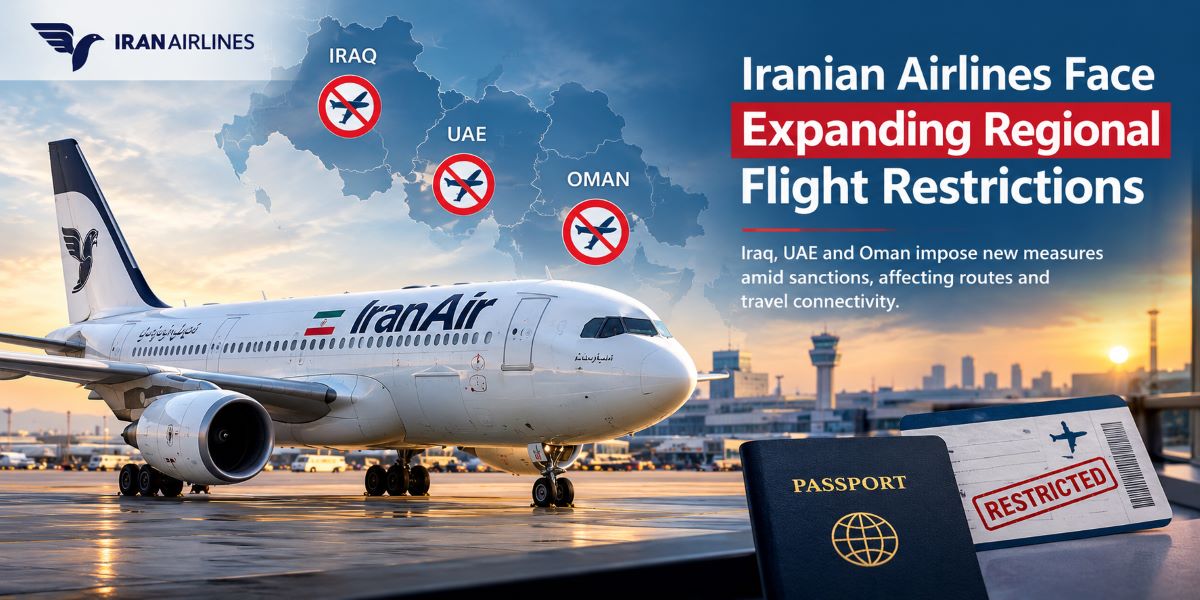
Iranian airlines flight restrictions are expanding as regional authorities introduce new limits affecting air connectivity involving Iran. According to the reported news, Iraq has further curtailed Iranian flights, while earlier measures also affected operations involving the UAE and Oman. The developments have emerged alongside new U.S. sanctions, creating additional challenges for airlines serving regional routes.
What Is Happening to Iranian Airlines?
Regional Flight Restrictions Are Expanding: The latest Iranian airlines restrictions involve limits on certain flight operations rather than automatically stopping every international service. For Iranian carriers, access to neighboring countries is important because regional routes provide connections for passengers, cargo, and onward international travel. Any change in that access can make route planning more difficult.
Iraq Further Curbs Iranian Flights: Iraq has reportedly introduced further measures affecting Iranian flights, making Iranian airlines Iraq operations an important part of the latest development. Iraq’s location makes it a significant regional aviation link for Iran, so restrictions can affect available routes and connectivity. The exact impact depends on the airline, airport, and specific flight involved.
Earlier Restrictions in the Gulf Region: Earlier measures have also affected Iranian aviation operations involving the UAE and Oman. These Iranian airlines UAE and Iranian airlines Oman restrictions can create additional pressure when several regional markets become more difficult to access. However, the measures do not necessarily apply equally to every airline or route.
Why Are Iranian Airlines Facing These Restrictions?
U.S. Sanctions and Regional Aviation: New U.S. sanctions are part of the wider backdrop surrounding the reported Iranian airline sanctions. U.S. sanctions and restrictions imposed independently by other countries are not the same thing, although they can create overlapping operational challenges for airlines. The effect may include difficulties involving financial services, partnerships, aircraft support, or international operations.
Compliance With International Restrictions: Airlines operating internationally must comply with the rules of the countries where they fly or transit. Iranian aviation restrictions can therefore affect scheduling, route planning, insurance, airport access, and other operational arrangements. Carriers may need to review services when regulatory requirements change.
Geopolitical Tensions and Air Connectivity: Geopolitical tensions can have a direct effect on international aviation by changing access to airspace, airports, and connecting markets. For travelers looking for flights to Iran, restrictions can mean fewer route choices or changes to available connections. Continued uncertainty could also influence how airlines plan their regional networks.
Which Countries Are Restricting Iranian Airline Operations?
Iraq: Iraq is at the center of the latest developments, with reported measures further limiting certain Iranian flights. Because Iraqi airspace and airports provide important regional links for Iran, restrictions can affect how carriers plan routes and maintain connections with nearby destinations.
United Arab Emirates: The UAE has also been associated with earlier measures affecting Iranian airline operations. As a major aviation and transit hub, changes involving the UAE can influence Iran regional flights, particularly for passengers who rely on connections through major Gulf airports.
Oman: Oman has also been mentioned in reports concerning restrictions affecting Iranian aviation. The operational impact depends on the specific measure and route involved, so confirmed restrictions should be separated from speculation about wider Iran flight restrictions.
Are All Iranian Airlines Affected?: Not all carriers are necessarily affected in the same way. Iranian flights restrictions can vary according to the airline, route, aircraft, airport, and jurisdiction involved. Travelers should therefore check the specific airline and flight rather than assuming that one restriction applies across Iran’s entire aviation network.
How Could the Restrictions Affect Iranian Flights?
Fewer Regional Flight Options: Restrictions can reduce the number of available routes and direct connections between Iran and nearby countries. For airlines, this may mean adjusting schedules or reducing services on routes where access becomes more difficult.
Longer or More Complicated Travel Routes: Passengers may need to use alternative airports or connecting routes when a direct service is unavailable. These changes can increase travel time and make Iran air travel restrictions more noticeable for travelers planning regional or international journeys.
Aircraft and Network Utilization: Changes in route access can also affect how airlines use their aircraft and crews. Carriers may need to redeploy aircraft, adjust schedules, or revise network plans when certain destinations or airspace become unavailable. This can have wider effects on airline capacity and operational planning.
What Does This Mean for Travelers?
Passengers Traveling To or From Iran: Travelers should check the latest flight status before departure and confirm that their planned route is still operating. When booking flights to Iran, it is also useful to allow extra flexibility because regional restrictions can change schedules or available connections.
Connecting Through the Region: Connecting airports can become important when direct routes are restricted. Passengers should check both the operating airline and transit airport before traveling, particularly when their journey involves countries affected by Iranian airline restrictions.
Could Flights Be Cancelled?: Restrictions can result in schedule changes, route adjustments, or cancellations on affected services. However, this does not mean all Iranian flights will be cancelled. The impact depends on the specific airline, route, airport, and regulatory requirements.
How Could Iranian Airlines Respond?
Adjusting Flight Routes: Airlines may look for alternative routes where they are legally and operationally permitted to do so. Any change depends on available airspace, airport access, and the rules of the countries involved.
Changing Schedules and Capacity: Carriers may reduce, reorganize, or temporarily adjust services when route access changes. Aircraft can also be reassigned to destinations where fewer restrictions apply, helping airlines manage available capacity.
Looking for Alternative Regional Connections: Iranian carriers may consider other airports or transit points to maintain regional connectivity where possible. However, available alternatives depend on current regulations, airport access, and the evolving Iran airline restrictions affecting international operations.
What Does This Mean for Regional Aviation?
Reduced Connectivity With Iran: Expanding restrictions could reduce the number of available connections between Iran and neighboring countries. This may affect passengers who depend on regional routes and businesses that rely on reliable air links for travel, trade, and commercial activity.
Pressure on Iranian Airlines: Multiple restrictions can make network planning more difficult for Iranian carriers. Airlines may need to reconsider routes, schedules, aircraft deployment, and connecting options when access to important regional markets changes.
Wider Impact on Middle East Air Travel: The effects can extend beyond Iran because regional airline networks are closely connected. Changes at airports, transit hubs, or airspace routes may affect connecting passengers and carriers operating across the wider Middle East.
What Should Travelers Do Before Booking an Iranian Flight?
Check the Latest Airline Information: Travelers should verify their flight directly with the airline before departure. Checking for recent schedule, route, or airport changes can help avoid unexpected problems.
Review Transit Requirements: Passengers using a connecting route should confirm the rules of the transit country and check whether the connecting airport is currently serving their planned route. This is especially important when traveling amid changing Iranian aviation restrictions.
Allow for Possible Changes: Travelers should keep their plans as flexible as possible when conditions are uncertain. Rechecking flight information shortly before departure can help passengers identify last-minute changes.
Key Facts About Iranian Airline Flight Restrictions
| Question | Answer |
| What is happening? | Iranian airlines are facing additional regional flight restrictions. |
| Which country recently tightened restrictions? | Iraq, according to the reported news. |
| Which other countries have been mentioned? | The UAE and Oman have also been associated with earlier restrictions. |
| Why are restrictions being imposed? | The reported measures are linked to wider sanctions and geopolitical developments. |
| Could passengers be affected? | Yes. Affected routes may face changes in availability or schedules. |
| Are all Iranian airlines affected equally? | No. Restrictions can vary by airline, route, and jurisdiction. |
| Could regional connectivity decrease? | Yes. Restrictions could reduce available connections involving Iran. |
| Should travelers check flights before departure? | Yes. Travelers should confirm current airline and airport information. |
Frequently Asked Questions?
Why are Iranian airlines facing regional flight restrictions?
Iranian airlines face additional restrictions amid sanctions and geopolitical tensions affecting regional aviation.
Which country recently restricted Iranian flights?
Iraq has reportedly further curtailed Iranian flights, adding to existing regional restrictions.
Are Iranian airlines restricted in the UAE and Oman?
Earlier measures have also affected Iranian airline operations involving the UAE and Oman, according to the reported news.
Are all Iranian airlines affected?
Not necessarily. The impact depends on the airline, route, airport, and specific regulations involved.
Will the restrictions affect passengers?
They could affect flight availability, schedules, connections, and travel options involving Iran.
Could Iranian flights be cancelled?
Some affected services may face changes or cancellations, depending on the route and applicable restrictions.
Why are U.S. sanctions relevant to Iranian airlines?
U.S. sanctions can create additional financial and operational challenges for Iranian aviation.
Can Iranian airlines still operate internationally?
Yes, where they have the required permissions and access. Restrictions vary by country and route.
What should passengers do before flying?
Passengers should check their airline, airport, and transit information shortly before departure for updates.
Could these restrictions reduce connectivity with Iran?
Yes. More restrictions could reduce direct and connecting travel options involving Iran.
Will restrictions affect flights through Iraq?
Potentially. The impact depends on the specific Iraqi measures and the affected airline or route.
What happens next for Iranian airlines?
Future impacts will depend on regulatory decisions, sanctions, regional developments, and available international routes.
