
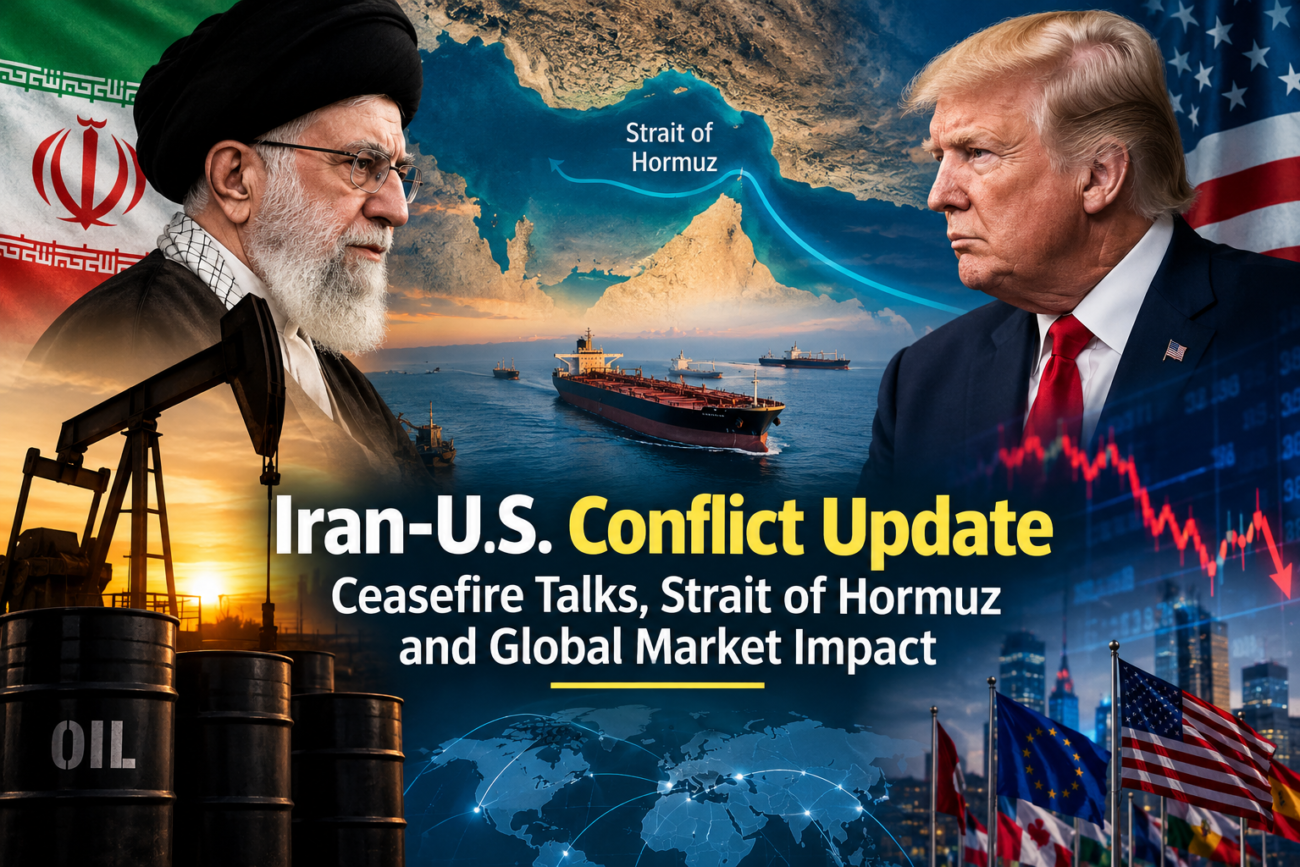
Iran-U.S. Conflict Update: Ceasefire Talks, Strait of Hormuz and Global Market Impact
The Iran-U.S. conflict remains a major international story as diplomatic efforts, military tensions and economic pressure continue to shape developments across the Middle East. Recent discussions have focused on a proposed ceasefire, the reopening of the Strait of Hormuz and conditions surrounding future negotiations.
The situation is also affecting energy markets, international shipping and regional economies. Here is a clear overview of the major developments and what they could mean for the wider global economy.
Iran-U.S. Ceasefire Talks Continue Amid Uncertainty
Iranian officials have said they are waiting for a formal response from the United States regarding Tehran’s proposed seven-day ceasefire plan. The proposal also includes a phased reopening of the Strait of Hormuz.
According to the material provided, the proposal was communicated through Qatari mediators. U.S. President Donald Trump, however, publicly rejected the proposal, while officials on both sides continued discussions through intermediaries.
The disagreement highlights the difficulty of reaching an immediate settlement, particularly over sanctions, nuclear issues and the sequence of commitments required from both sides.
Why the Strait of Hormuz Matters
The Strait of Hormuz is one of the world’s most important energy routes. Disruptions in the waterway can affect the movement of crude oil and other energy products from the Persian Gulf to international markets.
The competitor report notes that roughly one-fifth of the world’s traded oil and gas previously moved through the narrow waterway. Any prolonged disruption can therefore create pressure on energy prices, shipping and global supply chains.
Iran’s proposed ceasefire plan includes a phased reopening of the strait, making the waterway a central part of ongoing diplomatic efforts.
Oil Prices Remain Under Pressure
Uncertainty surrounding the Strait of Hormuz has contributed to significant movements in oil prices.
The report said Brent crude had recently moved around the $100-per-barrel level, substantially above the approximately $72 price reported before the conflict began.
Higher oil prices can increase transportation and production costs. Businesses may face higher operating expenses, while consumers can experience increased prices for fuel and other goods.
Global Markets React to Middle East Tensions
Financial markets have also responded to developments surrounding the conflict.
The competitor report described U.S. stocks as relatively unstable while Treasury yields moved higher. Investors have been watching oil prices, inflation risks and the possibility of prolonged disruption to energy supplies.
Technology stocks can also face pressure when interest rates and Treasury yields rise because higher borrowing costs can affect how investors value growth-oriented companies.
“Geopolitical tensions can also affect broader economic conditions, particularly through energy prices, investment, trade and financial markets. For a wider look at how technology is influencing these economic trends, see our analysis of AI and the Global Economy.”
New U.S. Sanctions Target Iran’s Supply Network
The United States has continued using economic sanctions as part of its pressure campaign against Iran.
According to the supplied report, the U.S. Treasury Department announced sanctions against individuals and companies accused of supporting Iran’s military procurement network.
The targets reportedly included people and entities connected to Iran, China-related locations, Hong Kong and Pakistan.
Sanctions can make international financial transactions and access to equipment more difficult, potentially increasing economic pressure on the targeted country.
Iran’s Currency Faces Further Pressure
Iran’s economic difficulties have also been reflected in the value of its currency.
The supplied report said the Iranian rial reached another record low against the U.S. dollar, with the free-market exchange rate exceeding 2.5 million rials per dollar.
A sharply weaker currency can make imported goods more expensive and add to inflationary pressure, particularly when a country already faces sanctions and disruptions to international trade.
Regional Energy Routes Become Increasingly Important
The disruption around the Strait of Hormuz has encouraged countries and energy companies to look for alternative transportation routes.
The report highlighted Iraq’s use of Syria’s Baniyas port to move fuel and Saudi Arabia’s East-West crude oil pipeline as examples of alternative routes that can reduce dependence on shipping through the Strait of Hormuz.
These alternatives may provide additional flexibility, but their capacity and security remain important considerations for international energy markets.
Yemen Crisis Adds to Regional Pressure
The conflict is also connected to wider instability across the Middle East.
The supplied report said renewed fighting in Yemen has placed additional pressure on the country’s already fragile health system. The World Health Organization warned that the humanitarian situation was deteriorating while diseases such as cholera continued to circulate.
The escalation has also displaced large numbers of people, increasing the humanitarian challenges facing the region.
Shipping Security Remains a Major Concern
Commercial shipping in and around the Strait of Hormuz has faced increased security concerns.
The report described an incident in which a vessel was struck by a suspected projectile while transiting the waterway. The fire was reportedly extinguished and the crew remained safe.
Repeated incidents involving commercial vessels can increase insurance, transportation and operational costs while encouraging shipping companies to consider alternative routes.
Aviation Disruptions Affect Travelers
The conflict has also affected aviation.
According to the supplied report, U.S. restrictions on Iranian aviation contributed to flight cancellations and disrupted travel plans. Some passengers attempting to leave Iran reportedly faced limited flight options and considered traveling by land to neighboring countries.
Such disruptions demonstrate how geopolitical conflicts can affect ordinary travelers as well as governments and businesses.
What to Watch Next
Several developments will be important for the international community in the coming days and weeks:
- Whether the U.S. and Iran can reach an agreement through intermediaries
- Whether the Strait of Hormuz can gradually reopen for commercial shipping
- How oil prices respond to changes in regional security
- Whether additional sanctions are imposed on Iran
- How financial markets respond to energy and inflation risks
- Whether fighting spreads to other parts of the region
- Whether humanitarian conditions in Yemen improve or deteriorate
Conclusion
The Iran-U.S. conflict is affecting far more than relations between two countries. The situation is influencing energy supplies, shipping routes, financial markets, regional security and humanitarian conditions.
The Strait of Hormuz remains particularly important because disruptions there can quickly affect international energy markets. At the same time, continued diplomatic efforts could influence the direction of the conflict and the future of regional trade.
For businesses, investors and consumers around the world, developments in the Middle East remain important to monitor because changes in energy prices and supply routes can have broader economic consequences.
