
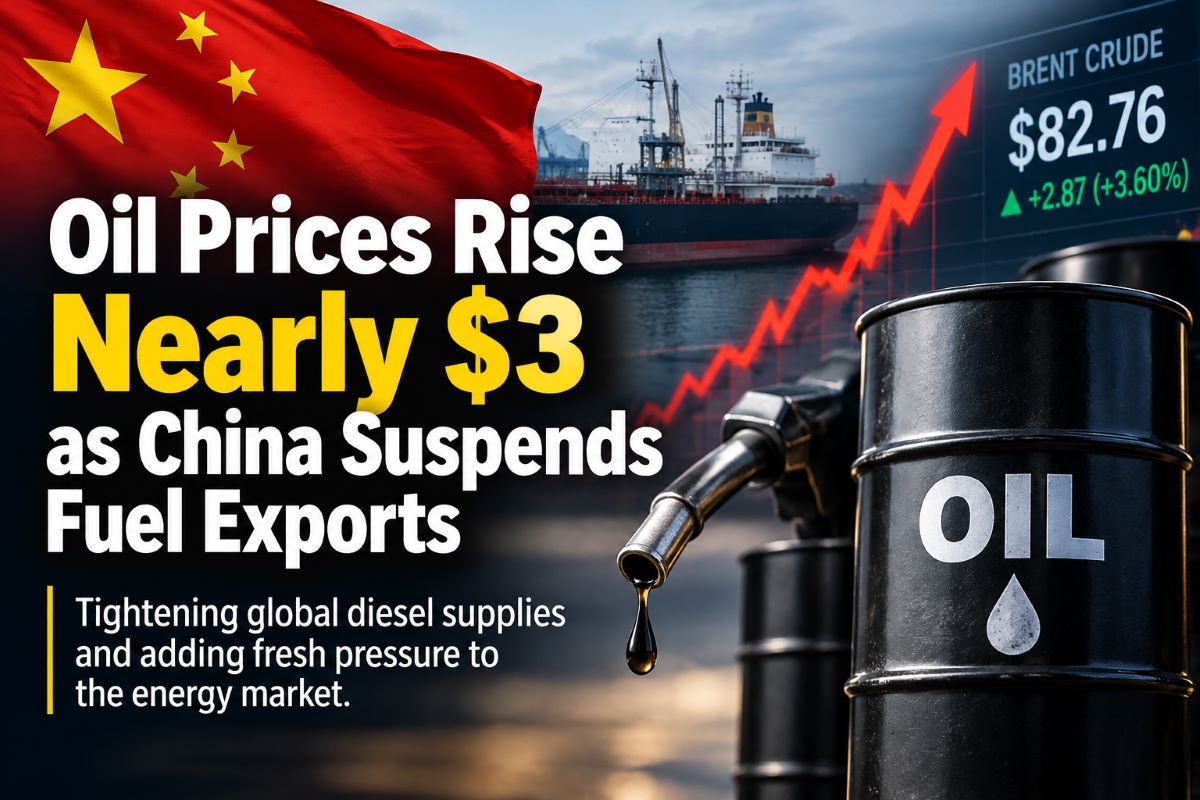
Oil Prices Rise $3 After China Suspends Fuel Exports
Oil prices climbed sharply on Thursday after Chinese refiners suspended oil-product exports to markets outside Hong Kong and Macau, adding fresh pressure to an already tight global fuel market. Brent crude moved back above $100 a barrel as traders assessed shrinking refined-fuel supplies, geopolitical uncertainty and the outlook for global energy demand.
According to Reuters, the December Brent contract traded around $101.20 per barrel, up more than $3 from Wednesday’s close, while U.S. West Texas Intermediate crude rose to around $92 per barrel during Thursday trading.
The latest move highlights how developments in refined fuels—not just crude oil—are increasingly influencing energy markets.
China Suspends Oil-Product Exports
Chinese refiners have suspended exports of oil products to destinations beyond Hong Kong and Macau until further notice, according to people briefed on the matter. The decision affects products such as gasoline, jet fuel and diesel.
Reuters reported that some October shipments were cancelled as Chinese refiners moved to preserve domestic fuel supplies. It remains uncertain when broader export permissions will resume.
The timing is significant because international fuel markets are already facing supply constraints.
China is one of the world’s largest refining centers, meaning changes in its export flows can quickly affect fuel availability across Asia and other importing markets.
Why Oil Prices Reacted So Quickly
The market reaction was driven primarily by concerns about refined-product supply.
Crude oil can still reach many markets, but converting crude into diesel, gasoline and jet fuel requires functioning refinery capacity. Disruptions affecting refineries or fuel exports can therefore create shortages even when crude production remains relatively strong.
The latest Chinese restrictions add another layer of pressure to that situation.
UBS analyst Giovanni Staunovo said the export restrictions could indicate concerns about fuel availability inside China, while the effect on China’s future crude-import demand remains uncertain.
Diesel Supply Is Becoming a Major Concern
Diesel has emerged as one of the most closely watched parts of the global energy market.
Supplies have already been affected by disruptions to refining infrastructure and restrictions on exports from major suppliers. Russia has also extended restrictions on diesel exports through October, adding further pressure to international markets.
The result is a market where diesel availability can have an important influence on transportation, manufacturing, agriculture and logistics costs.
For businesses, higher diesel prices can eventually translate into higher operating and shipping expenses.
Middle East Oil Flows Are Recovering
Not every factor is pushing oil prices higher.
Oil exports from the Middle East have shown signs of recovery, providing some relief to the crude market. Saudi Arabia has also resumed tanker loadings from Yanbu after restoring operations through its East-West Pipeline.
These developments could help increase crude availability.
However, refined products remain more constrained than crude, which explains why the market continues to react strongly to changes in diesel, gasoline and jet-fuel supplies.
Geopolitical Risk Keeps Traders on Edge
Energy markets are also closely watching developments surrounding the conflict involving Iran and the broader Middle East.
Uncertainty surrounding diplomatic efforts has kept traders cautious because any further disruption to shipping routes or energy infrastructure could reduce supplies available to international buyers.
The Strait of Hormuz remains particularly important because it is a major route for global energy shipments. Recent disruptions and attacks involving vessels have added another layer of uncertainty to the market.
For oil traders, even the possibility of another supply interruption can cause significant price movements.
What Higher Oil Prices Could Mean for Businesses
A sustained increase in crude and refined-fuel prices could affect companies across multiple industries.
Transportation
Airlines, trucking companies and shipping operators could face higher fuel expenses. Companies that depend heavily on diesel may see their operating costs rise more quickly.
Manufacturing
Factories often rely on fuel directly or indirectly through transportation and electricity costs. Higher energy prices can therefore increase production expenses.
Retail and Consumer Goods
When transportation and manufacturing become more expensive, businesses may eventually pass some of those costs to customers through higher prices.
Airlines
Jet-fuel costs are particularly important for airlines because fuel represents a significant portion of operating expenses. A prolonged rise in refined fuel prices could put pressure on airline profitability.
What Happens Next?
The next phase of the oil market will depend on several factors.
Investors will be watching China’s fuel-export policy, Middle East crude flows, Russian diesel restrictions and developments affecting international shipping.
Markets will also monitor whether additional emergency fuel stocks are released by governments. Reuters reported that an EU energy taskforce was expected to discuss a possible release of diesel stockpiles.
If Chinese exports remain restricted for an extended period while other major supply disruptions continue, refined-product markets could remain under pressure.
On the other hand, stronger Middle East exports or easing geopolitical tensions could provide some relief.
Oil Market Faces a Delicate Supply Balance
Thursday’s price move shows how sensitive global energy markets have become to changes in fuel availability.
China’s decision to suspend oil-product exports does not automatically mean that crude oil supplies will collapse. Instead, it adds pressure to a market where diesel and other refined fuels are already relatively tight.
Brent’s move back above $100 demonstrates that traders are placing significant value on supply security and the risk of further disruptions.
For businesses and consumers, the key issue will be whether this latest supply shock proves temporary or becomes part of a longer period of elevated energy costs.
For now, the global oil market remains focused on one central question: can additional fuel supplies reach consumers quickly enough to offset the latest restrictions and ongoing disruptions?
