
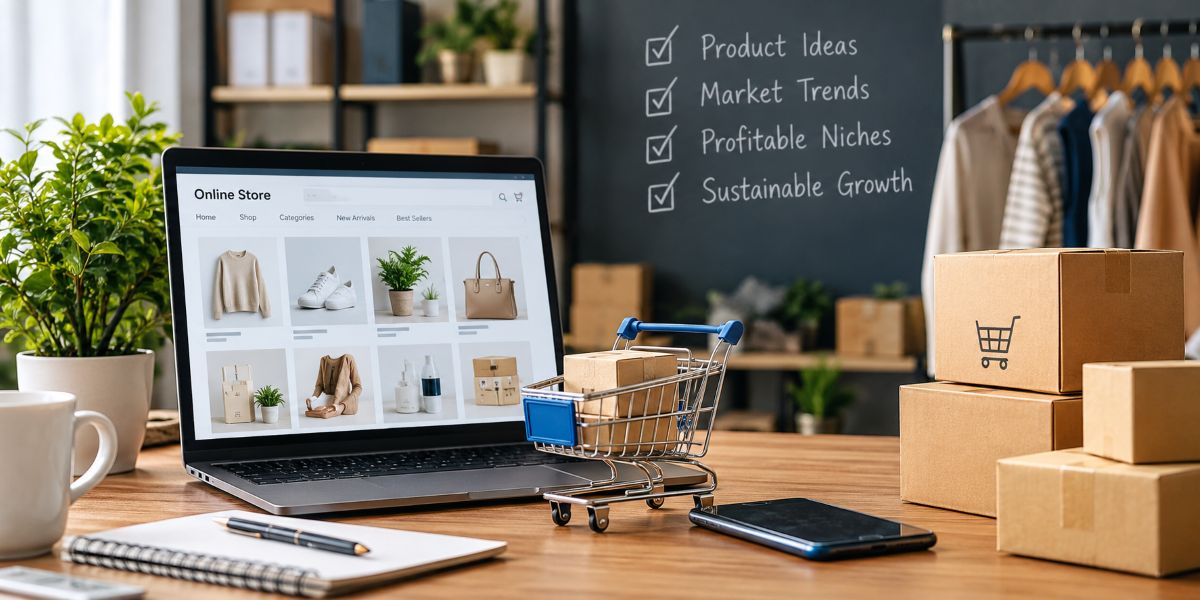
Best Products to Sell Online: What to Sell for a Sustainable Online Business
Starting an online store is easy. Choosing something people will actually buy—and that still leaves you with a profit after shipping, packaging, returns, and platform fees—is the harder part.
That is why the best products to sell online are not necessarily the products currently going viral on social media. A better opportunity is usually a product with clear customer demand, manageable competition, simple fulfilment, and enough margin to support marketing.
For Indian sellers, categories such as beauty and personal care, home products, fashion, tech accessories, personalised products, and wellness-related goods continue to attract online demand. Recent ecommerce reporting also shows strong growth in beauty, FMCG, healthcare, and other everyday consumer categories.
What Makes a Product Worth Selling Online?
Before buying inventory, look at the business behind the product.
A potentially strong online product should ideally have:
- A clear problem or need it solves
- A customer who understands its value quickly
- Reasonable shipping and packaging costs
- Enough margin after all expenses
- Low chances of damage or returns
- Scope for repeat purchases or related products
- A way to differentiate it from dozens of similar listings
For example, selling a generic phone case may seem attractive because demand is obvious. But if hundreds of sellers offer nearly identical cases, competing only on price can make the business difficult.
A better approach might be to target a narrower audience—such as customised cases for specific communities, professions, hobbies, or regional interests.
Best Product Categories to Consider
1. Beauty and Personal Care
Skincare, haircare, grooming products, cosmetics, and personal-care accessories have strong online potential because customers frequently research these products before purchasing.
The category also offers opportunities for repeat buying. However, sellers need to pay particular attention to authenticity, product claims, ingredients, packaging, and applicable regulations.
India’s beauty and personal-care market is currently seeing strong digital demand, with online sales expected to become an increasingly important part of the category.
2. Home and Kitchen Products
Products that solve everyday household problems can work particularly well online.
Think about storage organisers, kitchen tools, cleaning accessories, reusable household products, desk organisers, or compact home-improvement items.
The advantage is that these products can often be demonstrated visually. A short video showing how a storage product saves space, for example, can communicate its value much faster than a long product description.
3. Fashion and Accessories
Clothing, ethnic wear, bags, jewellery, watches, and fashion accessories remain important ecommerce categories.
The challenge is competition and returns, especially with clothing where sizing can become an issue.
New sellers can reduce that pressure by choosing a specific niche rather than opening a store that sells “everything.” A store focused on office accessories, regional fashion, handmade jewellery, or a particular customer group gives shoppers a clearer reason to choose it.
4. Mobile and Tech Accessories
Phone stands, laptop accessories, charging accessories, desk setups, cable-management products, and other non-complex tech accessories can be practical choices for beginners.
However, technical products require careful quality control. A cheap product that fails quickly can generate refunds, negative reviews, and additional shipping costs.
5. Personalised and Custom Products
Personalised gifts, printed merchandise, customised stationery, photo products, and event-related products can provide an alternative to competing directly with mass-market sellers.
The customer isn’t simply buying an object—they are buying something designed for a particular person or occasion.
That makes customisation a useful way to create differentiation.
Don’t Choose a Product Before Checking the Numbers
One of the biggest mistakes new sellers make is calculating profit using only the buying and selling prices.
Suppose you purchase a product for ₹300 and sell it for ₹699. That does not automatically mean you make ₹399.
You may still need to account for:
Product cost + packaging + shipping + marketplace fees + payment charges + advertising + returns = actual cost
Only after calculating these expenses can you judge whether the product makes commercial sense.
Competitor research also matters. Current ecommerce guides increasingly recommend validating demand and competition before committing substantial inventory rather than relying on a product simply being labelled “trending.”
How to Test a Product Before Buying Large Inventory
You do not need to start with 20 products.
Choose one category and test a small selection.
For example, if you want to sell home-organisation products, start with three related items. Create good product photographs, write useful descriptions, publish short demonstration videos, and monitor which product receives the most clicks, enquiries, and purchases.
This gives you actual customer feedback instead of relying entirely on assumptions.
You can then expand around the product that demonstrates genuine demand.
Where Should You Sell?
Your selling channel should match your product and customer.
Marketplaces can provide existing traffic but usually involve platform rules, fees, and strong competition. Social commerce can work well for visually demonstrable products and direct customer relationships. An independent website gives you greater control over branding, customer data, and the shopping experience, but you have to generate the traffic yourself.
For a new business, combining channels can make sense: use marketplaces or social platforms to test demand while gradually building a branded online store.
Build the Business, Not Just the Product Listing
The most profitable product is not always the most popular product.
A seller with better product photography, clearer information, reliable delivery, responsive customer service, and a distinct brand can compete successfully against larger collections of generic products.
This is also where TimesScopeJournal can be useful for readers exploring business and digital-marketing ideas: the focus should not stop at finding something to sell. Product selection, positioning, content, search visibility, social promotion, and customer trust all work together.
Final Thoughts
The best products to sell online are products you can understand, source reliably, explain clearly, and sell at a sustainable margin.
Instead of asking, “What is trending right now?”, ask better questions:
Who needs this? Why would they buy it from me? How much will I actually earn after every expense? And can I build a business around it?
Start small, test real demand, learn from customer behaviour, and expand only when the numbers support the decision. That approach is far more reliable than filling a store with dozens of products simply because they appear on a trending-products list.
