
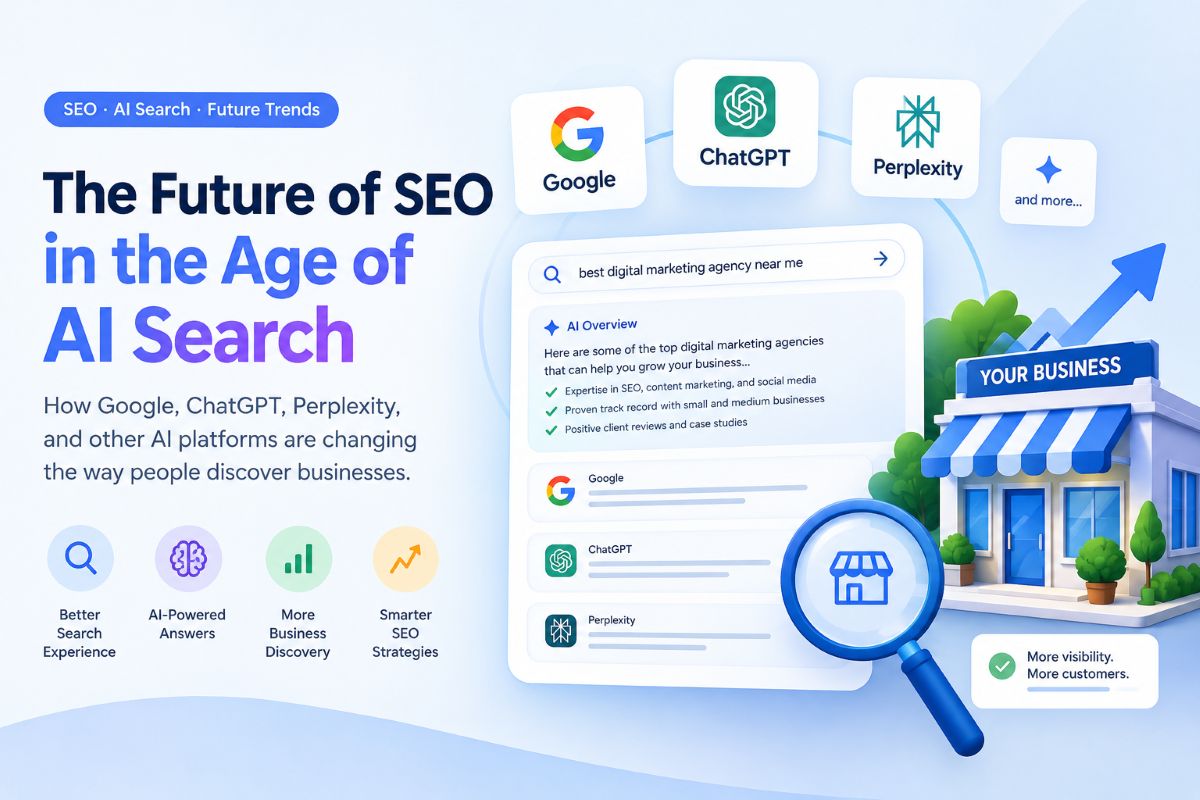
The Future of SEO in the Age of AI Search
Search engine optimization (SEO) is changing as artificial intelligence transforms how people search for information and discover businesses online. In the past, users mainly relied on Google to find websites, compare services, and explore products. Today, platforms such as Google AI Overviews, ChatGPT, and Perplexity are creating new ways for people to find answers, research businesses, and make decisions.
How AI Is Changing the Search Experience
Traditional search engines usually display a list of websites based on a user’s query. AI-powered search platforms can go a step further by understanding questions, summarizing information, and providing relevant sources.
AI is also influencing business operations and economic growth, making it important to understand the broader impact of artificial intelligence on the global economy.
For example, instead of searching only for “best SEO services,” a user might ask ChatGPT or Perplexity, “How can a small business improve its website rankings and attract more customers?” These platforms can help users explore the topic through conversational answers and relevant references.
This shift means businesses need to focus not only on traditional search rankings but also on creating helpful content that answers real customer questions.
The Role of Google in AI Search
Google continues to combine traditional search results with AI-powered features. AI Overviews can summarize information from multiple sources, helping users understand a topic more quickly.
For businesses, this creates another opportunity to become visible online. Websites with useful, accurate, well-organized content may be considered as sources for relevant search experiences. However, appearing in AI-generated answers is not guaranteed.
Businesses should continue investing in keyword research, technical SEO, quality content, and a positive user experience to strengthen their online visibility.
How ChatGPT Is Changing Business Discovery
ChatGPT allows users to explore topics, ask follow-up questions, and, when web search is available, discover relevant online sources. This conversational approach can help people research products, compare services, and understand which solutions may fit their needs.
Businesses can prepare for this change by publishing detailed service pages, practical guides, frequently asked questions, and informative articles. Clear explanations and reliable information can help potential customers understand a brand’s expertise.
However, simply adding keywords to a website does not guarantee that ChatGPT will mention or recommend a business. Relevant, accessible, and useful content remains essential.
Why Perplexity Matters for SEO
Perplexity is an AI-powered search platform that provides conversational answers with supporting sources. Users can explore a topic while reviewing references that help them investigate the information further.
This creates opportunities for businesses that publish original research, expert insights, industry analysis, and educational resources. Content that provides clear answers and credible information can help readers discover a website through relevant source citations.
Businesses should prioritize accuracy, useful examples, and trustworthy references rather than attempting to manipulate AI-generated recommendations.
How Businesses Can Optimize for AI Search
To adapt to the changing search landscape, businesses should combine traditional SEO practices with a focus on useful, accessible information.
1. Create helpful content: Publish articles that answer customer questions clearly and provide practical solutions.
2. Understand search intent: Research what users want to learn, compare, or purchase before creating content.
3. Improve technical SEO: Ensure important pages are accessible to search crawlers, mobile-friendly, and easy to navigate.
4. Build brand credibility: Maintain accurate business information and demonstrate expertise through useful resources and genuine customer experiences.
5. Strengthen internal linking: Connect related pages so users and search engines can discover relevant information across the website.
6. Earn relevant backlinks: Build relationships with reputable websites and publish valuable resources that deserve to be referenced.
7. Monitor performance: Track organic traffic, search impressions, conversions, and identifiable referrals from AI platforms to understand how discovery is changing.
The Future of SEO: What Businesses Should Expect
AI search is expanding the ways people discover information and businesses online. Instead of relying exclusively on traditional search results, users may encounter brands through AI-generated summaries, conversational answers, and cited sources.
This does not mean traditional SEO is becoming irrelevant. Keyword research, technical optimization, helpful content, and relevant backlinks remain important foundations for online visibility.
The businesses best prepared for this change will be those that understand their audiences, provide reliable information, and continually improve their websites as search behavior evolves.
Conclusion
The future of SEO is not simply about ranking higher on Google. It is also about helping people discover, understand, and trust a business across different search experiences.
Google, ChatGPT, Perplexity, and other AI platforms are changing how users explore information and evaluate their options. By combining strong SEO fundamentals with helpful content, technical accessibility, and a credible online presence, businesses can build a stronger foundation for long-term digital visibility.
As AI search continues to evolve, the most effective strategy is to focus on delivering genuine value to users rather than optimizing solely for algorithms.
