
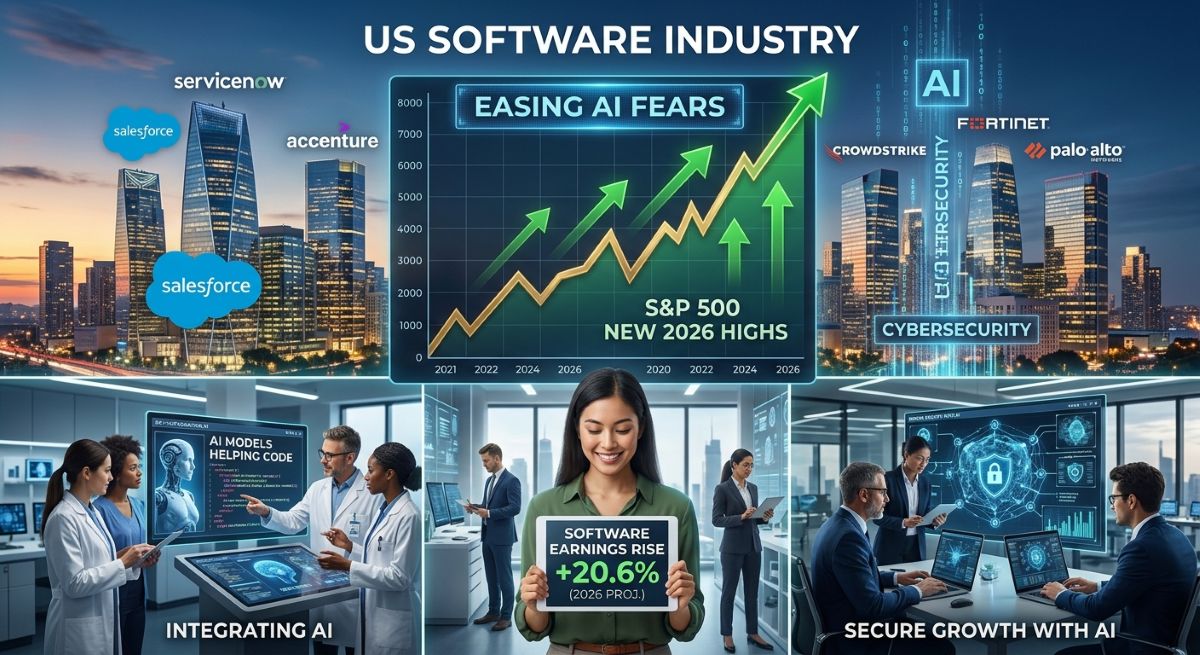
US Software Stocks Hit Fresh 2026 Highs as AI Fears Ease
US software stocks are reaching fresh highs in 2026 as investors become increasingly confident that artificial intelligence will support, rather than destroy, the long-term growth prospects of software companies.
The recovery comes after months of concerns that generative AI could allow businesses to build software internally at a lower cost, putting traditional software providers under pressure. Recent earnings results and stronger demand for AI-related services, however, have helped ease some of those worries.
Software Stocks Regain Momentum
The S&P 500 software and services index climbed 1.3% on Tuesday, reaching its highest level since November 2025. The sector also recorded its strongest quarterly performance since the second quarter of 2020 during the July-September period.
Companies including Salesforce, ServiceNow and Accenture have delivered strong results, while partnerships between software companies and AI developers have provided another source of optimism.
The improving outlook suggests that investors are beginning to view AI as an important growth opportunity for established software businesses rather than simply a competitive threat.
AI Is Becoming an Opportunity for Software Companies
One of the biggest changes in investor sentiment has been the perception of how AI will affect software companies.
Earlier in 2026, investors worried that powerful AI coding tools could allow companies to create applications without relying as heavily on traditional software vendors. That concern contributed to a major selloff across the sector.
However, AI adoption has increasingly moved beyond experimentation. Businesses are now using AI to improve productivity, automate processes, strengthen cybersecurity and enhance existing software platforms.
This shift has helped change the market narrative. Instead of replacing software companies immediately, AI could increase demand for platforms capable of integrating AI into enterprise workflows.
The “SaaSpocalypse” Fears Have Faded
The software sector experienced a significant decline from late January through April, with the software index falling more than 26% from its January levels.
The selloff became known as the “SaaSpocalypse,” reflecting concerns that AI could fundamentally disrupt the software-as-a-service business model.
Those fears now appear to have moved ahead of the available evidence. Customer adoption of AI-powered products has continued, while software vendors have reported growing demand for new AI-related capabilities.
For investors, the key question is no longer simply whether AI will disrupt software. Instead, attention is shifting toward which software companies can successfully use AI to expand revenue, improve products and maintain customer relationships.
Cybersecurity Stocks Lead the Recovery
Cybersecurity has emerged as one of the strongest areas within the software industry.
Companies such as CrowdStrike, Fortinet and Palo Alto Networks have recorded triple-digit percentage gains during 2026 as businesses increase spending on cybersecurity.
The rapid expansion of AI is creating new security challenges for companies, including more sophisticated cyberattacks, automated threats and larger volumes of digital data.
As organizations deploy more AI systems, protecting networks, applications and sensitive information becomes increasingly important. That dynamic could provide cybersecurity companies with an additional source of long-term demand.
Software Earnings Expectations Are Rising
Another important factor behind the recovery is the improvement in earnings expectations.
According to LSEG data cited in the market report, the expected annual earnings growth rate for the software sector in 2026 has increased to 20.6%, compared with 13.8% at the end of March.
Rising earnings expectations can influence stock valuations because investors generally become more willing to pay higher prices when they expect companies to deliver stronger future profits.
The improvement therefore suggests that the software rebound is being supported not only by market sentiment but also by expectations for better corporate performance.
Software Still Trails Semiconductor Stocks
Despite the recent rebound, software stocks have not matched the extraordinary performance of semiconductor companies this year.
The software index is up around 5% in 2026, while the Philadelphia Semiconductor Index has gained approximately 87.5%.
That gap highlights how strongly investors have favored companies involved in AI chips and computing infrastructure.
However, some market strategists believe the leadership trend could begin to change if software companies continue delivering strong earnings and successfully monetize AI.
What Could Happen Next?
The long-term outlook remains uncertain because AI technology is developing rapidly.
Some analysts believe the biggest threat to traditional software companies may emerge later, as greater data-center capacity and increasingly capable AI coding systems become available.
That could make it easier for businesses to develop certain applications internally, potentially putting pressure on software vendors whose products can be replicated or replaced.
At the same time, companies that successfully integrate AI into their products could benefit from stronger customer demand and new revenue opportunities.
Investors Are Watching AI Adoption Closely
The software industry’s next phase will likely depend on how effectively companies turn AI capabilities into sustainable business growth.
Strong earnings, increasing enterprise adoption and demand for cybersecurity are currently supporting the sector. But investors will continue to monitor whether AI ultimately becomes a major competitive threat or a powerful growth engine for established software businesses.
For now, the latest market performance suggests that fears of immediate AI-driven disruption have eased, allowing software stocks to regain momentum and challenge their previous highs.
Conclusion
US software stocks are entering a new phase as investors reassess the impact of artificial intelligence on the industry. Strong earnings from major companies, rising profit expectations and growing demand for cybersecurity have helped restore confidence.
While AI remains a potential source of disruption, the current market trend indicates that many software companies are finding ways to use the technology to strengthen their businesses.
The bigger test may come as AI coding and data-center capabilities continue to improve. Until then, software stocks appear to have regained an important position in the broader technology market.
