
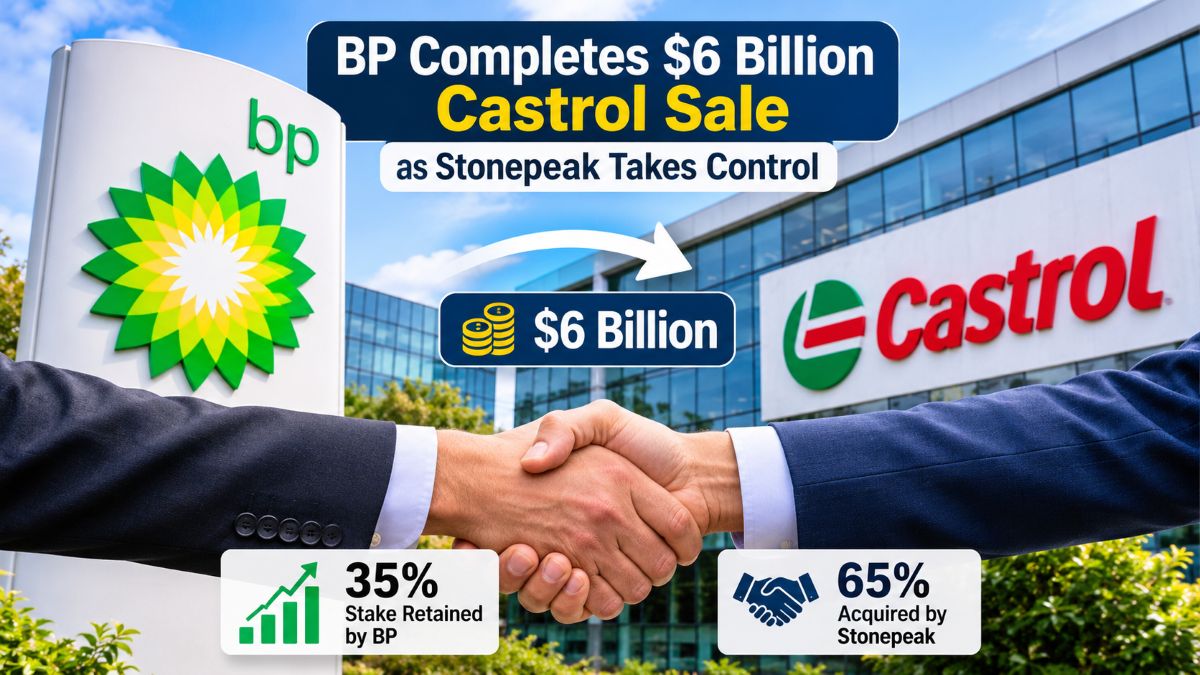
BP Completes $6 Billion Castrol Sale as Stonepeak Takes Control
BP has completed the sale of a 65% controlling stake in its Castrol lubricants business to US investment firm Stonepeak, marking a major step in the British energy company’s ongoing financial restructuring. The transaction generated approximately $6 billion in after-tax proceeds for BP, which plans to use the funds to strengthen its balance sheet and reduce financial obligations.
Completed on November 2, 2026, the deal follows an agreement announced in December 2025 that valued Castrol at approximately $10.1 billion. Although Stonepeak now holds majority control, BP will retain a 35% minority interest, allowing it to maintain exposure to the business while focusing on its broader corporate strategy.
BP Completes the $6 Billion Castrol Transaction
The transaction transfers majority ownership of Castrol to Stonepeak, an investment firm specializing in infrastructure and other long-term assets. The new ownership structure is designed to provide Castrol with greater financial and operational flexibility as it enters its next phase of development.
BP’s decision to sell a controlling interest is part of a wider effort to simplify its business portfolio, reduce debt and concentrate investment on operations that management considers strategically important.
The approximately $6 billion in net proceeds represents a significant financial contribution to BP’s restructuring plans. The company has been pursuing a broader divestment strategy, with a target of generating around $20 billion through asset sales and other portfolio changes.
Why BP Is Selling a Majority Stake in Castrol
BP has been reviewing its business portfolio to improve financial discipline and strengthen its balance sheet. The company has faced pressure from investors to manage debt, improve capital allocation and focus on businesses capable of delivering competitive returns.
The Castrol transaction supports these objectives by converting a majority ownership interest into substantial proceeds while allowing BP to retain a minority stake.
BP reported net debt of approximately $13.9 billion at the end of September 2026, down significantly from $22.3 billion at the end of June. The reduction reflected strong cash generation and other financial measures during the third quarter.
The Castrol proceeds provide additional flexibility as BP continues to address its remaining financial commitments and evaluate further asset sales.
Stonepeak Takes Control of Castrol’s Future
Under the new arrangement, Castrol will operate with a standalone management structure, its own governance framework and a board of directors representing the new ownership arrangement.
Former Shell chief executive Ben van Beurden has been appointed chairman of Castrol’s newly established board. The board includes independent directors, representatives from Stonepeak and BP, and a representative from Canada Pension Plan Investment Board.
Stonepeak plans to focus initially on operational improvements and sustainable growth. Its investment is intended to help Castrol expand its existing operations and explore opportunities in adjacent markets.
Castrol CEO Michelle Jou will continue leading the business following the ownership transition.
Castrol’s Global Lubricants Business Offers Growth Opportunities
Castrol has operated for more than 127 years and has developed a strong international presence in the lubricants market. Its products serve customers across automotive, marine, industrial and energy sectors, with distribution in more than 150 countries.
Beyond traditional engine oils and industrial lubricants, the company also has opportunities in advanced mobility and thermal management applications.
Thermal management is becoming increasingly important as industries adopt electric vehicles, advanced manufacturing systems and more sophisticated digital infrastructure. These developments could create new demand for specialized fluids and cooling solutions.
Castrol’s established customer relationships, technical expertise and international distribution network provide a foundation for pursuing these opportunities.
How the Sale Fits BP’s Wider Restructuring Strategy
The Castrol sale is one part of BP’s wider portfolio restructuring. The company has been reviewing several assets and operations as it seeks to simplify its business and improve capital allocation.
BP has also completed the sale of its Gelsenkirchen refinery and agreed to divest its Austrian mobility and convenience business. Other potential disposals, including selected North Sea assets and its Archaea Energy business, have also been part of its portfolio review.
The broader restructuring reflects a renewed emphasis on financial returns, operational efficiency and balance-sheet strength.
For a wider perspective on how investment decisions and major business changes influence economic development, readers can explore our coverage of AI investment and global economic growth in 2026.
What the Castrol Deal Means for BP Investors
The completion of the transaction gives BP a substantial amount of additional financial flexibility. Investors will be watching how management allocates the proceeds, particularly as the company continues to prioritize debt reduction and address outstanding liabilities.
Analyst opinions on BP shares remain mixed. Some investment firms have raised their price targets following the company’s recent financial results, while Bank of America maintained an Underperform rating, citing limited upside against fourth-quarter consensus expectations.
This difference in outlook highlights an important point: a large asset sale does not automatically guarantee stronger share-price performance. Investors will also consider future earnings, oil and gas prices, capital expenditure, debt levels and the company’s ability to deliver its restructuring plans.
BP’s upcoming strategy update in December 2026 is expected to provide further details about its financial priorities and longer-term direction.
What Happens to BP’s Remaining 35% Stake?
BP will continue to hold a 35% minority interest in Castrol after the transaction. This allows the energy company to retain a connection to the lubricants business while transferring majority control and operational direction to Stonepeak.
The retained stake also gives BP potential exposure to Castrol’s future development. However, the financial arrangements mean BP does not expect to recognize income or dividends from the investment in the short to medium term.
BP will also have the option to sell its remaining interest after a two-year lock-up period, according to the transaction terms.
Conclusion: A Major Step in BP’s Financial Restructuring
BP’s completion of the $6 billion Castrol sale represents an important milestone in its effort to strengthen its financial position and simplify its business portfolio. By transferring majority ownership to Stonepeak while retaining a 35% interest, BP has secured substantial proceeds without completely exiting the lubricants business.
For Castrol, the new ownership structure creates an opportunity to pursue operational improvements and expand into emerging markets. For BP, the longer-term success of the transaction will depend on how effectively it manages debt, allocates capital and delivers its wider restructuring strategy.
The next major test will be whether BP can turn its asset-sale proceeds and improved financial position into sustainable performance for investors.
Disclaimer: This article is for informational purposes only and should not be considered financial or investment advice.
