
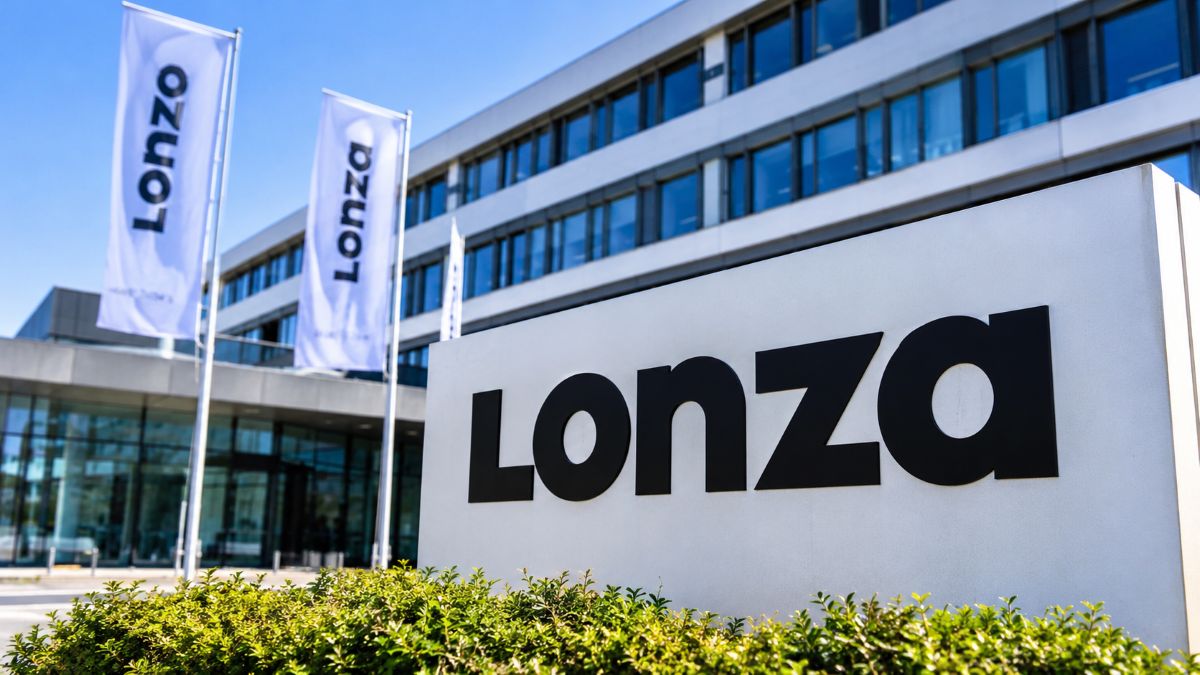
Lonza to Acquire Five Merck US Manufacturing Sites, More Than Doubling Its American Footprint
The pharmaceutical manufacturing industry is seeing a major shift as companies expand production capacity and strengthen their positions in the United States. Growing demand for advanced cancer treatments, gene therapies, and complex medicines is increasing the need for specialized manufacturing facilities and experienced contract development partners.
Swiss contract drug manufacturer Lonza has signed a definitive agreement to acquire five US manufacturing sites from Germany’s Merck KGaA. The transaction will more than double Lonza’s American manufacturing footprint, increasing its number of US sites from four to nine.
The acquisition will add approximately 1,100 employees and strengthen Lonza’s capabilities in bioconjugates, high-potency payload-linkers, viral vectors, and advanced drug-delivery technologies. The move also supports Merck’s strategy to sharpen its focus on its broader Life Science business.
Lonza Expands Its US Pharmaceutical Manufacturing Network
The agreement announced on November 3, 2026, gives Lonza access to five manufacturing facilities previously operated as part of Merck KGaA’s contract development and manufacturing organization (CDMO) business.
The facilities are located in Missouri, Wisconsin, California, and Indiana. Together, they will expand Lonza’s US network from four to nine CDMO sites and increase its American workforce to more than 6,000 employees.
A contract development and manufacturing organization provides pharmaceutical and biotechnology companies with specialized services to develop and manufacture medicines. These services can support products from clinical development through commercial production.
The acquired facilities are particularly valuable because they add capabilities in complex pharmaceutical technologies that Lonza previously lacked in parts of its US network.
According to Lonza, the acquisition is designed to strengthen its ability to support customers developing advanced medicines and to create a more comprehensive manufacturing network in the world’s largest market for innovative pharmaceuticals.
What Are the Five Merck Manufacturing Sites?
The five facilities bring different technologies and manufacturing capabilities to Lonza’s business. Their locations and specializations make the acquisition strategically important for the company’s future growth.
St. Louis, Missouri: Bioconjugate Manufacturing
The St. Louis facility specializes in bioconjugates, which combine biological molecules with other components to support advanced pharmaceutical treatments.
One important application is antibody-drug conjugates (ADCs). These targeted cancer medicines combine an antibody with a potent drug payload to help deliver treatment more directly to cancer cells.
The facility will strengthen Lonza’s ability to support pharmaceutical companies developing these increasingly complex therapies.
Madison and Verona, Wisconsin: High-Potency Payload-Linkers
The two Wisconsin sites specialize in high-potency payload-linkers used in targeted cancer treatments, including antibody-drug conjugates.
These components connect antibodies with therapeutic payloads. Their production requires specialized manufacturing environments because some compounds are highly potent and require strict handling procedures.
The facilities add important clinical and commercial manufacturing capabilities to Lonza’s US operations.
Carlsbad, California: Viral Vector Manufacturing
The Carlsbad facility provides end-to-end viral vector solutions, including aseptic fill-finish capabilities.
Viral vectors are used in certain gene therapy treatments to deliver genetic material into cells. Manufacturing these products requires specialized expertise, quality controls, and production infrastructure.
The acquisition will expand Lonza’s ability to support customers developing cell and gene therapies.
Indianapolis, Indiana: Advanced Drug-Delivery Technologies
The Indianapolis site specializes in lipid nanoparticles, liposomes, and PEGylated protein solutions, including aseptic fill-finish capabilities.
These technologies play an important role in modern drug delivery and pharmaceutical development. They can help researchers and manufacturers develop more sophisticated ways to deliver therapeutic substances.
Adding this facility will broaden Lonza’s technology portfolio and strengthen its ability to serve customers working on advanced medicines.
Why Lonza Is Investing More in the United States
The United States is one of the most important markets for pharmaceutical innovation and manufacturing. Drug developers need reliable production partners that can support complex therapies throughout clinical development and commercial supply.
Lonza has already been expanding its US manufacturing presence through previous investments and acquisitions.
In 2024, the company acquired Roche’s biologics manufacturing facility in Vacaville, California. It has also been investing in a spray-drying facility in Bend, Oregon.
The Merck transaction represents another step in this expansion strategy. More importantly, it adds specialized manufacturing capabilities and experienced teams rather than simply increasing the number of buildings in Lonza’s network.
The acquisition also comes amid greater attention to domestic pharmaceutical production and supply-chain resilience in the United States.
For Lonza, having more manufacturing capacity close to major pharmaceutical customers could strengthen customer relationships and create opportunities to support additional development and production programs.
How Much Is Lonza Paying for Merck’s Five Sites?
The companies have not published one exact final purchase-price figure in their initial announcements.
Lonza described the transaction’s enterprise valuation as being in the low- to mid-triple-digit millions of Swiss francs. Reuters separately reported that Lonza’s management indicated a purchase price around the midpoint of a CHF 100 million to CHF 600 million range during an investor and media call.
Merck’s announcement described the consideration as a mid-triple-digit million-euro amount.
The transaction will be funded with cash and Lonza’s existing credit facilities. Lonza also stated that it expects to maintain its BBB+ credit rating.
The valuation reflects a strategic acquisition of established manufacturing facilities, specialized technologies, and experienced employees. Its longer-term value will depend on how effectively Lonza integrates the operations and develops customer demand.
Lonza Expects CHF 250 Million in Sales in 2028
The acquired facilities are expected to generate approximately CHF 250 million in sales during full-year 2028, according to Lonza.
However, the company expects the sites’ initial CORE EBITDA margin to be below its group level. Their immediate impact on the overall group’s financial performance is expected to be insignificant.
Lonza expects the acquired operations to benefit from its dedicated CDMO business model, customer relationships, and global manufacturing network over time.
The company anticipates that the sites will reach peak sales and profitability at its future group margin level by the mid-2030s.
These figures are company projections rather than guaranteed results. Actual performance will depend on customer demand, manufacturing utilization, integration progress, and future investment.
Why Advanced Cancer and Gene Therapies Matter
The pharmaceutical industry is moving toward increasingly specialized treatments. Traditional manufacturing infrastructure is not always sufficient for complex therapies that require advanced production processes.
Antibody-drug conjugates, viral vectors, and other bioconjugates require specialized manufacturing expertise, strict quality controls, and dedicated facilities.
The five acquired sites give Lonza a broader position in these areas and allow the company to support customers across more stages of pharmaceutical development.
For biotechnology companies, access to experienced CDMO partners can help move a medicine from clinical development toward commercial manufacturing without having to build every specialized facility independently.
As investment in advanced medicines grows, manufacturing capacity and technical expertise are becoming increasingly important parts of the pharmaceutical industry’s competitive landscape. This development also connects with broader changes in business investment and economic growth, which readers can explore in our coverage of AI investment and global economic growth in 2026.
What the Acquisition Means for Merck KGaA
The transaction is also part of Merck KGaA’s broader portfolio strategy.
By divesting its CDMO business, the German company intends to concentrate its Life Science investments on areas where it sees strong long-term opportunities for innovation and growth.
The sale allows the manufacturing operations to move under Lonza, a company whose core business is contract development and manufacturing.
However, Merck will continue to serve pharmaceutical, biotechnology, and CDMO customers through its wider portfolio of technologies, consumables, and services.
Importantly, Merck’s BioReliance Contract Testing Services business is not included in the transaction and will remain part of its Life Science portfolio.
This means the agreement represents a strategic change in selected manufacturing operations rather than Merck’s complete exit from the life sciences industry.
What the Deal Could Mean for the US Pharmaceutical Industry
The acquisition highlights the growing importance of specialized manufacturing infrastructure in the United States.
Pharmaceutical companies increasingly need reliable partners that can manufacture complex medicines while maintaining strict production and quality standards.
By adding five established facilities, Lonza will have a larger presence in several important areas of advanced drug manufacturing.
The deal could also increase competition among CDMOs as companies seek to expand their geographic reach, technology portfolios, and manufacturing capacity.
For pharmaceutical customers, a broader manufacturing network may create additional opportunities to access specialized production services.
However, the long-term industry impact will depend on customer demand, successful integration, and the ability to operate the acquired facilities efficiently.
When Will the Lonza-Merck Acquisition Close?
Lonza and Merck expect the transaction to close in mid-2027, subject to customary closing conditions.
Until the transaction is completed, the acquired businesses will continue operating independently as part of the existing arrangements.
Both companies have stated that they will work together to support employees, customers, and business operations throughout the transition.
Following completion, Lonza’s priorities will include maintaining customer continuity, supporting the incoming workforce, and integrating the five facilities into its global manufacturing network.
The company will also need to manage future investment and manufacturing utilization to achieve its longer-term growth expectations.
Conclusion: A Major Step in Lonza’s US Expansion
Lonza’s agreement to acquire five manufacturing sites from Merck KGaA represents a significant expansion of its US pharmaceutical manufacturing network.
The transaction will increase Lonza’s American site count from four to nine, add approximately 1,100 employees, and strengthen its capabilities in bioconjugates, high-potency payload-linkers, viral vectors, and advanced drug-delivery technologies.
For Merck, the sale supports a more focused Life Science portfolio, while Lonza gains additional facilities and expertise in important areas of advanced medicine manufacturing.
Although the acquisition is expected to close in mid-2027, its strategic importance is already clear. The deal reflects the growing demand for specialized pharmaceutical manufacturing and the importance of reliable production networks as the industry develops more complex therapies.
The ultimate success of the transaction will depend on integration, customer demand, and the ability to turn additional capacity into sustainable business growth.
Disclaimer: This article is for informational purposes only and does not constitute financial or investment advice. Transaction details, financial projections, and expected closing dates may change.
Sources: Lonza official announcement, Merck KGaA official announcement, and Reuters reporting, November 3, 2026.
