


Wearables Health Data Under Scrutiny: Are They Safe — Or Risky?
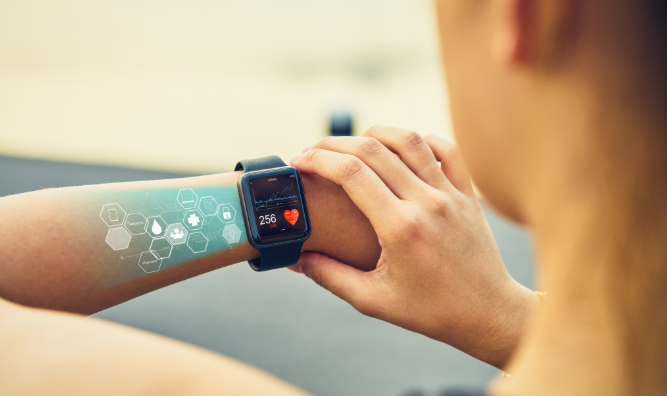
Wearable devices—like smartwatches, fitness bands, glucose monitors, and sleep trackers—have grown hugely popular. They promise convenience: monitoring your steps, heart rate, sleep, even stress levels. But with all that personal health information flowing through them, a serious question arises: Are wearables safe, or do they pose risks for your health data?
What Are Wearables and How Do They Collect Health Data?
Wearables are devices you wear—often on your wrist, finger, or body—that collect data about your physical condition and daily activities. They might track:
- Heart rate, blood oxygen, ECG (electrocardiogram)
- Steps, movement, calories burned
- Sleep patterns, restful vs. restless periods
- Stress levels, skin temperature, other metrics
- Even blood sugar or pacemaker signals in medical-class devices
These devices use sensors (optical, electrical, motion) and transmit data to companion apps on phones or cloud servers. That means your health data typically moves from the device → phone → cloud → possibly third parties (analytics, researchers, advertisers).
Because they collect data continuously and in real time, wearables generate a rich dataset about your body and habits.
The Promise: Benefits of Health Wearables
Wearables offer many advantages:
- Continuous tracking: Instead of occasional doctor visits, these devices monitor health metrics 24/7.
- Early warnings: Changes in resting heart rate, irregular rhythms, or sleep irregularities might hint at health issues earlier than traditional checks.
- Personal insight: Users get feedback and patterns on their exercise, sleep, and wellness habits.
- Remote care & research: Doctors and scientists can use aggregated data to monitor chronic diseases, tailor treatments, or run large-scale health studies.
Used wisely, wearables may shift health care from reactive to preventive.
The Risks: Privacy, Security & Data Misuse
Even as wearables promise to empower users, they carry notable risks. Here are the main concerns:
1. Data breaches and cyberattacks
Health data is extremely sensitive. In recent years, healthcare has seen many major breaches—millions of records exposed. In 2023 alone, over 133 million healthcare records were exposed across 725 reported breaches.
Cybercriminals targeting weaknesses in data transmission or servers may steal, manipulate, or ransom your health data.
2. Inadequate encryption and insecure transmission
Some devices transmit sensitive data in plain text or weakly encrypted channels. Attackers intercepting the data path—especially on shared Wi-Fi or Bluetooth—can access it.
Also, credentials or login tokens may be stored insecurely.
3. Reidentification of anonymized data
Even when companies anonymize data (remove names, IDs), patterns in the data can reveal who you are. A recent study showed that short segments of sensor data could perfectly re-identify individuals.
Thus “deidentified” doesn’t always mean safe.
4. Lack of transparency & third-party sharing
Privacy policies are often long, complex, and vague. Many users agree without reading and may not realize how their data is used.
Some wearable makers share data (or sell insights) to third parties, advertisers, or researchers — sometimes without clear consent.
Certain manufacturers, when evaluated, show weak or missing policies around transparency, breach notification, or third-party data use.
5. Regulatory gaps & low oversight
Many health wearables are marketed as “wellness” devices rather than medical devices, so they avoid stricter scrutiny.
Regulations like HIPAA (US) or GDPR (EU) protect certain kinds of health data, but many wearable apps and services fall outside these protections.
Because different devices and companies follow different standards, security protocols are inconsistent and sometimes minimal.
6. Data quality, bias, and fairness
Wearable sensors may produce errors or inconsistencies in readings. Algorithms trained on certain populations may not work well for others (e.g. across skin tones, body types).
If data is flawed, decisions or analyses based on it may be misleading.
Also, not everyone has access to wearables or related technologies — risking inequalities in who benefits and who is surveilled.
Regulatory Gaps and Industry Challenges
The wearable industry is still young and evolving. Some challenges include:
- Lack of standard security protocols: There is no universal standard that all devices must meet for encryption, authentication, etc.
- Fragmented regulation: Some jurisdictions have strong data protection laws; others do not.
- Blurred boundaries: Many devices are “consumer wellness” rather than medical devices, so they are lightly regulated.
- Consumer awareness: Many users don’t fully understand how their data is handled, or have weak security habits (reusing passwords, ignoring updates).
- Vendor trust & accountability: Some companies resist disclosing how data is used or sold.
Because of these gaps, critics argue for stronger legislation, oversight, and industry self-governance.
How to Use Wearables Safely: Best Practices
You can take steps to reduce risk and protect your health data:
- Choose reputable brands
Look for companies with clear privacy practices, strong security measures (end-to-end encryption, two-factor authentication). - Read and manage permissions
When installing apps, scrutinize what data the wearable app wants (location, sensors, contacts). Deny unnecessary permissions. - Keep firmware and apps updated
Updates often include security patches. Always install them as soon as available. - Use strong passwords and multi-factor login
Avoid default or weak codes. Enable 2FA if available. - Limit data sharing
Turn off automatic sharing with third parties unless needed. Be cautious about syncing to social networks or marketing services. - Delete old data
If you no longer use a wearable, remove its app and data from servers (when the option exists). - Use secure networks
Avoid sending data over open or public Wi-Fi without VPN or secure encryption. - Blend in manual checks
Use wearable data as insight—not as definitive medical answers. Always consult health professionals if something looks off.
By combining careful choices and habits, you can enjoy many benefits while reducing danger.
Future Directions: Can We Improve Safety?
The wearable industry and researchers are working on improvements:
- Stronger regulations: Some regions are pushing new laws to treat consumer health data more stringently.
- Privacy-enhancing technologies: Techniques like differential privacy, federated learning (where data doesn’t leave device), and adding random noise to data are being explored to balance usability and confidentiality.
- Industry standards: More consensus is emerging on minimum security protocols, certifications, and audits.
- Better transparency tools: Interfaces that clearly show what data is collected and offer simple toggles for control.
- User education: Raising awareness so users understand and demand better privacy protections.
While risks may never go to zero, these innovations aim to push wearable health data towards safer ground.
FAQ (Frequently Asked Questions)
Q1: Can hackers actually steal my health data from my wearable?
Yes — if the device or the data transmission has weak security, attackers can intercept or access it. That’s why encryption, strong passwords, and updates matter.
Q2: Is my data safe if it’s “anonymized”?
Not always. Even data stripped of names or IDs can sometimes be reidentified by clever techniques, especially when combined with other datasets.
Q3: Does regulation protect the data from my wearable?
Sometimes — in certain places and circumstances. But many wearable apps and services are outside strict health data laws, leaving gaps in protection.
Q4: Should I stop using wearables because of these risks?
Not necessarily. Weigh the benefits and risks. By choosing trusted devices, controlling settings, and being cautious, you can use wearables more safely.
Q5: What should I look for when buying a wearable for privacy?
Look for transparency (clear policies), security (end-to-end encryption, regular updates), control (you can control sharing), and reputation (company with privacy track record).
