


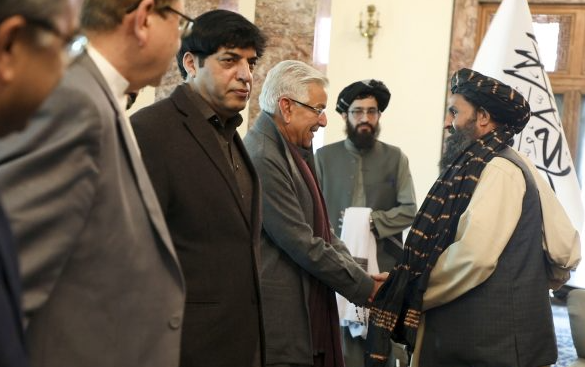
Taliban Accuses Pakistan of Violating Afghan Airspace — Tensions Rise
The relationship between Afghanistan’s Taliban government and neighboring Pakistan is once again under strain. Kabul has accused Islamabad of repeatedly violating Afghan airspace and carrying out cross-border shelling. Pakistan says its actions are necessary to stop militants launching attacks from Afghanistan. This article explains the claims, responses, what’s at stake, and the wider implications.
What Happened: Claims from Afghanistan
- The Taliban government says Pakistan has breached Afghan airspace—both over the capital Kabul and in rural border areas. They also claim that a civilian market in Margha, Paktika province, was bombed.
- Afghanistan’s Defence Ministry has lodged formal protests. It says such acts infringe on its sovereignty and cannot be tolerated.
- The Taliban warns of retaliation. Afghan officials say their armed forces are prepared to defend the nation’s borders if these violations continue.
Pakistan’s Position
- Pakistan has not openly confirmed or denied that it carried out the airstrikes. A senior military spokesman said that Pakistan will do what is necessary to protect its citizens.
- Islamabad claims that groups such as the Tehreek-e-Taliban Pakistan (TTP) are using Afghan territory as safe havens. Pakistan sees this as a major security risk and justifies some of its actions as counter-terrorism measures.
- Pakistan also suggests that others, possibly foreign actors, may be involved in supporting militants inside Afghanistan, complicating the situation.
Border Clashes & Retaliation
- Following the alleged airspace violations, Afghan forces reportedly attacked Pakistani border posts in what they call a “revenge operation.
- The exchanges included shelling, use of heavy artillery, and strikes on several border posts. Afghan forces say they captured some Pakistani posts.
- Pakistan responded by denying some claims, saying many reports are exaggerated, and asserting the need to respond to militant threats.
Why This Matters
Sovereignty & International Law
Airspace violations are serious under international law. Every country has sovereignty over its own airspace. If one state conducts strikes over another without permission, it risks diplomatic fallout or escalation.
Security Concerns
Pakistan has been beset by militant attacks for many years. If militants truly are using Afghan territory to plan and launch attacks, Pakistan views that as a threat that needs to be addressed. On the other hand, crossing the line of acting unilaterally inside another country can lead to retaliation and cycle of conflict.
Regional Stability
Both countries share a long, porous border. Tensions of this nature threaten trade, population movement, refugee flows, and wider regional peace. There is also the risk that other regional actors could be drawn in, whether through alliances or political pressure.
Challenges & Complications
- Lack of independent verification: Many of the claims from both sides are difficult to confirm independently. Civilian reports, visual evidence, or local media may help, but often the fog of conflict clouds clarity.
- Militants’ presence: Whether or not militants are indeed sheltering in Afghan territory is key. The proof and cooperation matter. If Kabul is unable or unwilling to prevent militant operations from its soil, Pakistan feels justified in taking action—though many see that as risky without formal cooperation.
- Border disputes and identity politics: The border between Pakistan and Afghanistan, especially along the Durand Line, is contested by some in Afghanistan. This adds tension, because even small cross-border incidents can become inflamed by historical grievances.
- Civilian harm: Bombing civilian markets or areas risks casualties. That can turn local populations against one or both governments, fuel propaganda, and make diplomatic solutions harder.
What Could Happen Next
- Diplomatic negotiations: There could be efforts to de-escalate via talks. Ambassadors have already been summoned by Afghanistan, and Pakistan may respond via its foreign offices.
- Third-party mediation: Regional powers or international bodies might step in to help mediate if tensions escalate.
- Escalation in military operations: If violations continue, either side may conduct more cross-border operations. This could include air operations, artillery, or special forces.
- Risk to civilians and infrastructure: Markets, homes, and innocent people could suffer if military operations widen.
- Increased monitoring: Both sides may increase surveillance, track air traffic more carefully, or use technology like drones to monitor border areas.
Conclusion
The accusations by the Taliban against Pakistan over violating Afghan airspace mark another spike in tensions between the two neighbors. Pakistan claims it must act to reduce militant threats. Afghanistan insists on its sovereignty and warns of retaliation. The balance between security demands and respecting borders is delicate. How both countries manage this crisis—through diplomacy, ceasefire, or continued clashes—will significantly affect peace and stability in the region.
FAQ
Q1: What does “violating airspace” mean?
It means one country’s aircraft enters another country’s air above its territory without permission. International law says every country controls its airspace.
Q2: Who are the TTP and why are they important?
TTP stands for Tehreek-e-Taliban Pakistan. It is a militant group that attacks security forces and civilians in Pakistan. Pakistan says some of its fighters operate from Afghanistan, which is part of why Pakistan says it must act.
Q3: What is the Durand Line?
The Durand Line is a border line drawn during the British colonial era between what is now Afghanistan and Pakistan. Some in Afghanistan do not fully recognize it. Because of this, border issues are more sensitive.
Q4: Can one country legally strike another if militants are based there?
Legally, countries are expected to respect each other’s sovereignty. If militants operate from a neighbor’s land, a country may feel compelled to act—but doing so without permission can violate international laws. Usually, diplomatic talks or multilateral arrangements are preferred.
Q5: What can civilians expect if cross-border fighting continues?
They may suffer damage to homes, markets, or infrastructure. Trade and movement across borders may be disrupted. Displacement of people may increase. Also, emergency services, health, and everyday life can be affected.
