


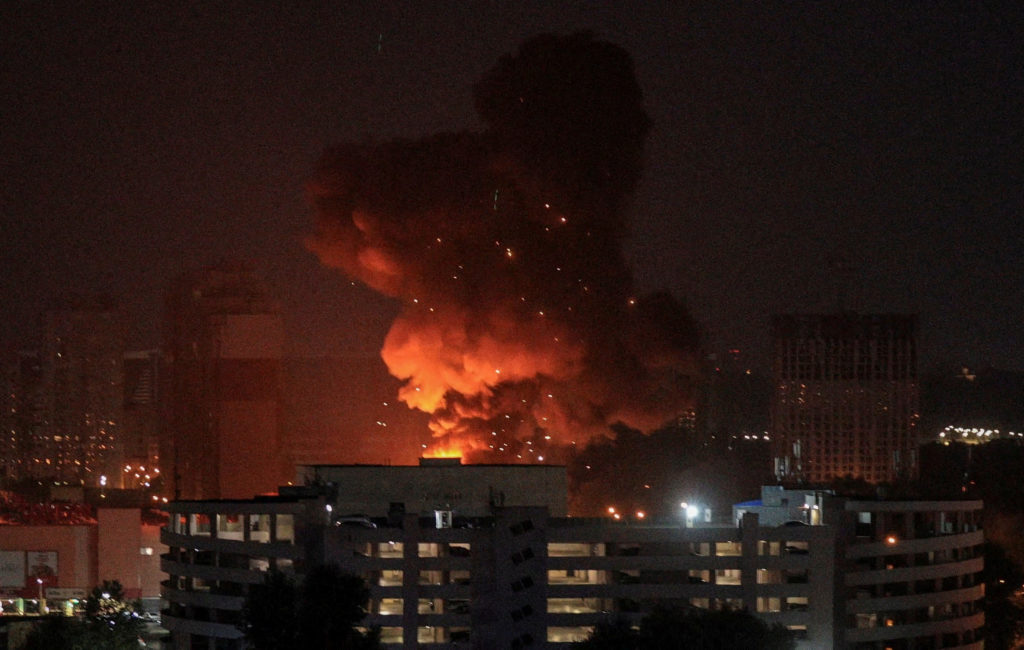
Russian Drones and Missiles Strike Multiple Ukrainian Cities
Russia has launched a new wave of attacks on Ukraine using drones and missiles. The strikes hit key cities including Kyiv and others far from front-line zones. Many civilians were hurt, buildings and infrastructure damaged, and power supplies disrupted. The attacks sparked strong reactions inside Ukraine and from international observers.
What Happened
- Overnight and morning attacks included large numbers of drones (often called “strike drones”) and guided missiles.
- Targets were not only military sites but also residential buildings, schools, hospitals, energy plants, and railway infrastructure.
- In many cases, Ukraine’s air defenses shot down a large portion of incoming drones and missiles. But despite this, some got through, causing destruction and loss of life.
- Cities like Kyiv, Lviv, Zaporizhzhia, Kharkiv, Sumy, and Odesa were among those affected.
Human Costs and Damage
- Civilian deaths: Several people, including children, were killed. Many more were injured, some severely.
- Property damage: Residential buildings, apartments, shops, hospitals, and educational institutions were damaged or destroyed. Roofs, windows, facades, and multi-story buildings suffered in many districts.
- Infrastructure hit: Energy networks were badly hit—power plants, gas infrastructure, pipelines, and electricity distribution suffered damage. Hundreds of thousands of households were left in the dark in some regions.
- Public services disrupted: Railways and stations were struck, causing disruptions. Hospitals and schools had to close or evacuate. In Kyiv, some metro stations were used as shelters when alerts sounded.
Why It Matters
- Winter fears: As Ukraine approaches colder months, damage to energy infrastructure could leave many without heat or electricity at a critical time.
- Psychological impact: These strikes often come at night or early morning. They add fear among civilians because homes and familiar places get hit.
- Strain on defences: Even though many drones/missiles are intercepted, each wave adds pressure. Ukraine has to rely heavily on anti-air systems, alertness, and civil protection.
- International tension: Some strikes push borders, cause neighboring states to react. Also, demands for more support—air defence systems from other countries, sanctions on Russia—grow louder.
How Ukraine Defends Itself
- Using air defense systems to shoot down drones and missiles. Many interceptors are deployed in large cities.
- Early warnings and alerts for residents. People are told to shelter in basements, metro stations, or safe rooms.
- Repair teams work quickly to restore power, water, and other essential services after attacks.
- Medical, rescue, and civil defence crews respond immediately after strikes.
Response from Leaders
- President Volodymyr Zelenskyy has criticized the international community for not doing enough. He calls for stronger and faster support, especially for air-defense systems.
- Ukrainian officials accuse Russia of intentionally targeting civilians and infrastructure to weaken morale and survival.
- Some neighboring countries have raised their alert levels. Airspace over or near border regions sometimes closed temporarily.
Recent Data and Scale
| Metric | Approximate Figures |
|---|---|
| Number of drones/missiles in major recent attacks | Dozens to nearly 500 drones + dozens of missiles in a single assault |
| Number of regions hit | Many – western, eastern, north and south of Ukraine |
| Power outages | Tens of thousands to hundreds of thousands of homes without electricity in some regions |
| Casualties | Several deaths (including children), many injured, often dozens or more depending on the strike |
Note: Exact numbers often vary depending on reports.
Challenges and Future Risks
- More advanced drones: Some drones are harder to detect or intercept. This means some strikes might get through more easily.
- Supply of defenses: Ukraine depends on external aid for many of its advanced defence tools. Delays can cost lives.
- Worse weather: As winter comes, working conditions will worsen, repair is harder, and being without heat or power is dangerous.
- Escalation risk: With repeated large-scale attacks, tensions rise, and the possibility of a wider conflict or greater international involvement increases.
What Can Be Done
- Increase supply of modern air defense systems, like missile interceptors, to Ukraine.
- Strengthen early warning systems and civilian shelters.
- Improve international coordination for sanctions, diplomacy, and support to reduce the targeting of civilians.
- Invest in infrastructure that is more resilient—making energy systems, buildings, transport less vulnerable.
FAQ
Q1: What kinds of drones and missiles are used in these attacks?
A: Russia uses strike drones—sometimes one-way drones that crash into targets—and guided missiles. Some of the drones are small and hard to detect, others are larger. Missiles can be ballistic, cruise, or glide-type.
Q2: Why are energy facilities often targeted?
A: Energy infrastructure is crucial for everyday life—power for homes, heating, hospitals. By damaging them, attackers aim to create hardship, especially during winter. It can disrupt essential services and reduce morale.
Q3: How good are Ukraine’s defenses?
A: The defenses are strong in many places—many drones and missiles are shot down. But they are under constant strain. When many drones come at once, or when targets are spread out far, it becomes harder to defend everywhere.
Q4: Are civilians getting help?
A: Yes. Rescue and medical teams respond quickly. Local and national governments try to repair services. International agencies often provide aid and funding. But damage is frequent and resources are stretched.
Q5: What might happen next?
A: More attacks could come, especially during bad weather or at times when people are vulnerable. Regions might face longer power outages or worse damage. There could also be greater calls abroad for more support to Ukraine and more pressure on Russia.
Summary
Russian drone and missile attacks have escalated, hitting many Ukrainian cities, damaging homes, hospitals, infrastructure, and power systems. While Ukraine’s air defenses intercept many threats, the toll on civilians and infrastructure remains high. The attacks carry both immediate damage and longer-term dangers—especially as winter nears. Stronger defenses, international support, and resilient infrastructure are crucial.
