


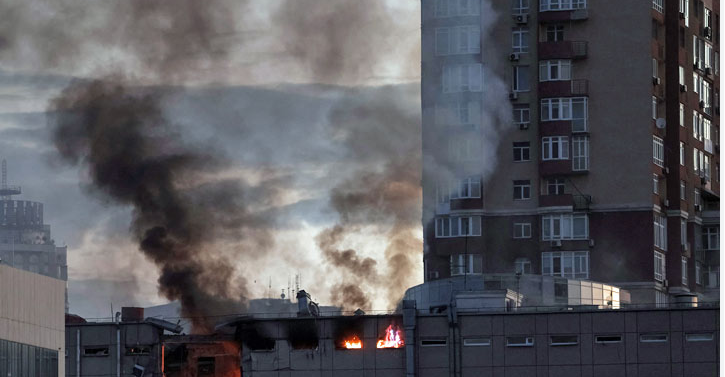
Russia Intensifies Strikes Ukraine Power Grid — Impact and Response
As winter looms closer, Russia has escalated its campaign of missile and drone strikes against Ukraine’s power grid and energy infrastructure. The goal appears to go beyond military advantage: by cutting electricity, gas, and heat, these attacks aim to impose suffering on civilians, erode public morale, and complicate Ukraine’s ability to maintain normal life during months of freezing cold.
This article explains why these strikes matter, what has already happened, the difficulties Ukraine faces, and what might come next.
Why Russia Is Targeting Ukraine’s Energy System
Strategic Motives
- Striking energy facilities is a way to pressure the civilian population and government by cutting off essential services.
- It forces Ukraine to divert resources toward repairing power plants and maintaining grids instead of focusing fully on defense.
- Russia may hope that prolonged blackouts will weaken Ukraine’s will to fight or push for concessions.
Timing: Ahead of Winter
- Winter months bring cold temperatures, when heating, power, and gas are critical.
- By intensifying attacks now, Russia hopes that damage persists into the coldest months, when recovery is harder.
- Officials suggest that Russia may be timing strikes when weather and other conditions reduce Ukraine’s air defense performance. (For example, Ukraine’s air defenses are said to be 20–30% less effective in bad weather.
New Focus on Gas Infrastructure
- In previous years, Russia mostly struck power plants and high-voltage grids. In 2025, it has also launched heavier attacks on gas extraction, processing, and distribution facilities.
- Destroying gas infrastructure complicates not only electricity supply but heating and industrial fuel sources.
Recent Attacks and Their Impact
Scale of the Assaults
- In a single wave, Russia launched hundreds of drones, dozens of missiles, and glide bombs targeting Ukraine’s power network.
- In its largest known gas-sector assault, Russia targeted Ukraine’s state-owned Naftogaz facilities across Kharkiv and Poltava regions.
Damage and Blackouts
- Many regions, including Kyiv, Donetsk, Odesa, Chernihiv, and others, experienced blackouts, water supply interruption, and disruptions to metro systems.
- Some thermal power plants and substations were damaged or knocked offline.
- At times, over 300,000 households were without electricity.
- The attacks have disabled almost 60% of Ukraine’s gas production capacity in some areas.
Challenges Facing Ukraine
Physical Damage and Complexity
- Energy systems are interlinked. Damaging one major plant or node can cascade effect across regions.
- Repairing power plants, substations, and gas pipelines takes time, materials, and skilled workers—in short supply under war conditions.
Resource Constraints
- Ukraine must import extra gas to compensate for lost domestic capacity. In one estimate, 4.4 billion cubic meters more gas may be needed, costing billions of dollars.
- Financial resources, spare parts, backup generators, and replacement equipment are costly and often delayed.
Defense vs. Repair Tradeoffs
- Every dollar and effort spent guarding energy infrastructure or repairing it is a diversion from military operations or frontline needs.
- Air defense systems are overstretched; even where Ukraine intercepts many drones or missiles, some get through.
Weather, Terrain, and Seasonality
- Winter weather complicates repair work: cold, snow, ice, and limited daylight reduce productivity.
- Remote areas are harder to reach, and logistics are more vulnerable to disruption.
Ukraine’s Response and Repair Efforts
Rapid Restoration
- Repair crews operate continuously to bring back power in affected zones. In Kyiv, over 800,000 customers had power restored after strikes in one instance.
- Decentralized power solutions (small gas-powered plants, solar panels, battery storage) are being deployed where possible.
Stronger Air Defense
- Ukraine is pushing for more and better air defense systems from international partners.
- They are also improving early warning systems, radar, and detection to intercept threats before they reach critical infrastructure.
International Aid and Cooperation
- Foreign assistance—both military and technical—has become crucial.
- Ukraine is urging its allies to sanction buyers of Russian oil or energy as part of pressure on Moscow.
- Strategic talks include the possibility of providing Ukraine with long-range missiles (like Tomahawks) to counter strikes.
Strategic Investments
- Ukraine is working to make its grid more resilient, modular, and capable of isolating damage zones to prevent cascade failures.
- Modernizing older plants and building redundancy is a long-term goal.
Broader Consequences
Humanitarian Crisis
- Extended blackouts worsen living conditions. People may go without heating in freezing weather, leading to health risks.
- Disruption to water supply, communications, hospitals, and public services amplify suffering.
Economic Strain
- Energy costs and reconstruction burden the national budget.
- Businesses lose productivity, factories may shut down, and supply chains in affected industries suffer.
Political and Social Impact
- Public morale is tested; prolonged hardship can erode confidence in leadership if recovery is slow.
- The international community responds: pressure on Russia, debates over military support, and humanitarian aid flows.
Escalation Risks
- Russia’s targeting of civilians and infrastructure crosses into disputed norms of warfare.
- If Ukraine receives longer-range weapons, the conflict might escalate further, potentially drawing in greater international stakes.
What Lies Ahead
- Winter will be a severe test. If strikes continue, cold months may bring widespread suffering and further strain on Ukrainian resilience.
- The pace and scale of foreign military aid—especially advanced air defenses—will be a key factor in how well Ukraine can shield its energy sector.
- Innovation and resilience matter. Ukraine’s ability to adapt, repair fast, and decentralize power could mitigate damage.
- Conflict expansion. If both sides escalate, civilian infrastructure risks more severe targeting, and war may deepen further.
FAQ
Q1: Why does Russia target Ukraine’s power grid instead of only military targets?
Russia aims to weaken civilian life and morale. Striking energy systems forces Ukraine to devote resources to repair and coping, and pressures citizens through hardship.
Q2: Can Ukraine restore the power quickly after a major strike?
Yes, sometimes. Repair teams work round-the-clock, but full recovery depends on damage magnitude, availability of parts, and security of repair routes.
Q3: Will winter make the situation worse?
Absolutely. Cold weather increases the demand for heating and electricity. Repair becomes harder in snow or freezing conditions, making blackouts more harmful.
Q4: What can Ukraine do to protect its energy infrastructure?
They can improve air defenses, decentralize power generation, build redundancy, use early warning systems, and enhance construction resilience.
Q5: How can the world help Ukraine in this energy war?
By providing air defense systems, emergency energy equipment, technical support, financial aid, and by increasing pressure on Russia through sanctions.
