


Illinois Sues to Block Trump National Guard Deployment: State Challenges Federal Authority
In a dramatic clash between state and federal power, the State of Illinois and the City of Chicago have filed a lawsuit seeking to stop the federal deployment of National Guard troops ordered by the Trump administration. The move raises deep questions about constitutional limits, state sovereignty, and political strategy.
What’s Happening? The Dispute Over Troop Deployment
Federal Order to Deploy Troops
Recently, the Pentagon ordered that 300 members of the Illinois National Guard be federalized and made available for deployment in Chicago. In addition, 400 troops from the Texas National Guard were slated to be sent into Illinois to assist. The federal government frames this as a response to threats against federal agents, rising unrest around immigration enforcement, and protection of federal property.
State and City Fight Back
On October 6, Illinois Attorney General Kwame Raoul — joined by the City of Chicago — filed suit against President Trump, the Secretary of Defense, Homeland Security officials, and other military leaders, asking for an immediate court order to block the deployment. The complaint argues that the White House has overstepped its constitutional and statutory authority.
Meanwhile, a federal judge, April Perry, declined to immediately block the deployment. The court gave the federal government until midnight Wednesday to respond, even as the troops begin to move.
This legal battle is connected to other recent confrontations in cities like Portland, Oregon, where a judge blocked a similar federal troop deployment. Those rulings are already influencing how judges view the balance between federal power and local control.
Legal and Constitutional Issues at the Core
Limits on Federalization of the National Guard
Under U.S. law (10 U.S.C. § 12406), the president may federalize a state’s National Guard only under narrowly defined conditions: invasion, rebellion, or when enforcing federal law is impossible by ordinary judicial means. In their lawsuit, Illinois argues that none of those conditions exist in the state right now, so the federal order is unlawful.
The state also contends that the Posse Comitatus Act, a longstanding law, forbids using the military for domestic civilian law enforcement — unless an exception like the Insurrection Act applies. The lawsuit claims the administration’s deployment would violate that prohibition.
The Insurrection Act as a Wild Card
The Trump administration has threatened to invoke the Insurrection Act, which would arguably allow broader use of military forces in domestic settings. Under that law, the president may deploy troops to quell insurrection or enforce federal laws when ordinary enforcement is insufficient. Critics argue the threshold for invocation is high and must be justified carefully.
Invoking the Insurrection Act would escalate legal and political conflict, and courts would likely be asked to weigh whether the conditions are met and whether the president’s decision is reviewable.
State Sovereignty and the Tenth Amendment
Illinois asserts that the federal move violates the Tenth Amendment, which reserves to states the power to govern and maintain public order. By imposing troops without consent, the administration is accused of undermining Illinois’ authority to manage internal affairs, including policing and public safety.
The state also warns that deploying troops could harm public confidence, depress business, and fuel resentment – in effect turning cities into militarized zones rather than restoring order.
Political Stakes & Reactions
Officials and Critics Sound the Alarm
Governor J.B. Pritzker has publicly denounced the deployment as an “invasion,” complaining there was no consultation or coordination from the federal level. Chicago’s mayor, Brandon Johnson, also criticized the lack of transparency around troopers’ mission and their chain of command.
State and local leaders see the deployment as a politically motivated effort to heighten tensions in Democratic-led jurisdictions.
The Administration’s Defense
The Trump administration argues that troops are needed to protect federal personnel, facilities, and agents — especially in the context of recent demonstrations around immigration enforcement sites. Officials suggest that some local governments cannot be trusted to provide adequate security for federal operations.
In its defense in court, the administration will likely argue that the president has broad discretion in deciding when enforcement actions cross thresholds that require federal military support.
Broader Context: Other States and Precedents
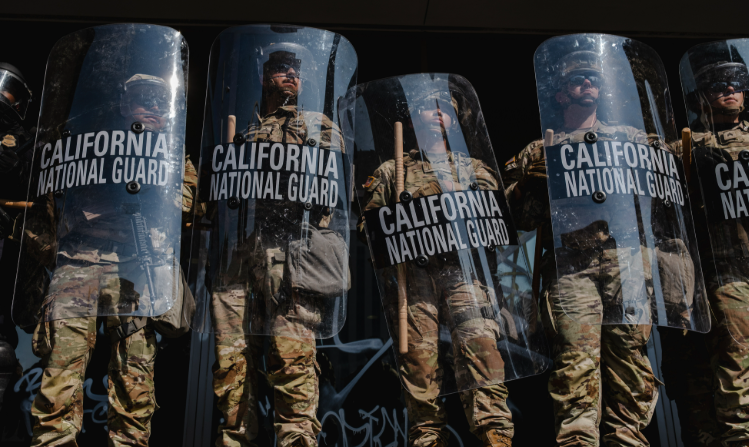
This is not the first time states have clashed with the federal government over troop deployment. Earlier in 2025, California sued over the deployment of federalized National Guard troops to Los Angeles. That case (Newsom v. Trump) raised similar constitutional and statutory debates. In Oregon, a judge blocked deployment of troops until further hearings.
Those precedents may shape the outcome in Illinois: whether courts accept that federal power is being stretched beyond its legal limits.
Possible Scenarios & What Comes Next
1. Court Blocks the Deployment
A judge could issue a restraining order or injunction that halts the troop deployment until a full hearing determines whether it is lawful. If the court finds the federal order exceeds authority, it would be a major victory for states’ rights advocates.
2. Deployment Continues While Litigation Proceeds
As the current judge has done, a court may allow troop movement to continue temporarily while the case unspools. The battle would then shift to appellate courts and potentially the Supreme Court.
3. Invocation of the Insurrection Act
If the administration formally invokes the Insurrection Act, courts would be forced to decide whether the legal criteria are met. That could become a landmark decision defining how far presidential power extends in domestic military use.
4. Negotiated Political Resolution
To avoid prolonged legal and public backlash, state and federal negotiators might reach a compromise on troop presence, mission rules, and oversight. But tensions are high, and neither side seems likely to back down easily.
Why This Matters (Summary)
- The case will test the boundaries between federal authority and state sovereignty.
- A ruling against the administration could limit future use of troops in U.S. cities.
- It raises foundational constitutional issues (the Tenth Amendment, Posse Comitatus, and the Insurrection Act).
- The outcome may influence how far future presidents can deploy military forces inside the U.S.
- It is deeply political: both sides view the dispute as a referendum on control, safety, and authority.
FAQ: Understanding the Dispute
Q1: What is the National Guard, and who controls it?
The National Guard is a state-based military force. Under normal circumstances, each state’s governor commands it. But in certain cases, the federal government may “federalize” the Guard and place it under national control — but only under narrow legal authority.
Q2: Why is Illinois suing the federal government?
Illinois argues that the Trump administration’s orders violate the Constitution and federal law. The state says the conditions for federalizing troops don’t exist, making the deployment illegal and an infringement on state power.
Q3: What is the Posse Comitatus Act, and why does it matter?
The Posse Comitatus Act generally bars the U.S. military from acting in domestic law enforcement. It’s a guardrail against military rule in civilian life. Any military use in policing normally requires legal exceptions — and that is a key point of contention.
Q4: What is the Insurrection Act, and could Trump use it?
The Insurrection Act is a statute that allows the president to use military forces domestically in extreme cases — like rebellion, insurrection, or serious law enforcement breakdowns. The administration has threatened to invoke it, but doing so would be controversial and face legal scrutiny.
Q5: What might be the final outcome?
It depends. Courts may block the deployment, allow it conditionally, or permit it while the case is litigated. If the case escalates, the debate could reach the Supreme Court and set precedent for future domestic military use.
