


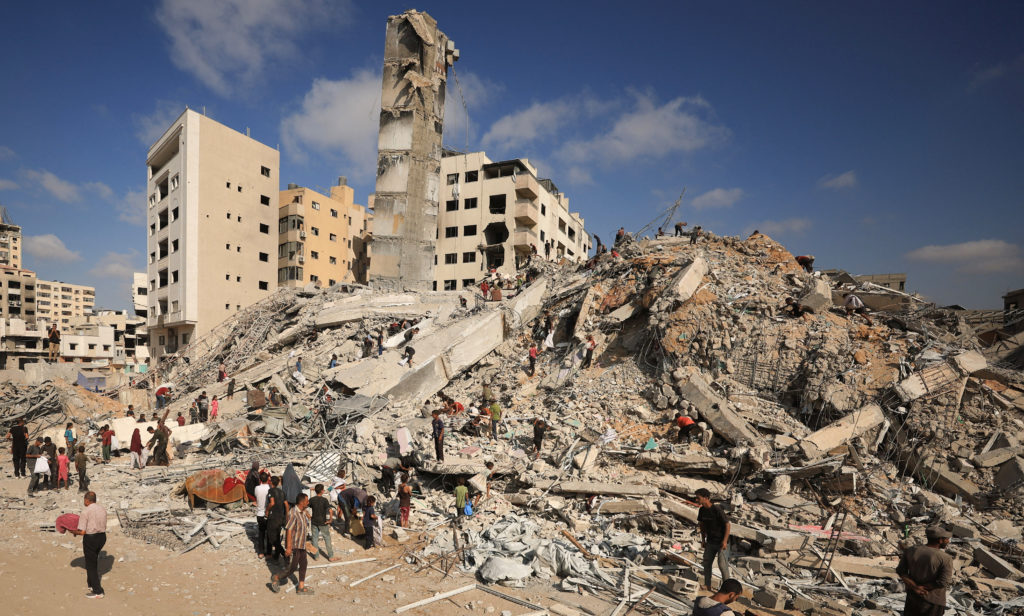
Gaza City Exit Blockage: Israel Urges Residents to Evacuate Ahead of Offensive
Israel has blocked the main southern exit route from Gaza City, telling residents to leave before an expected major military offensive. This action has raised deep concern across the region and the world, as thousands of civilians remain trapped inside a devastated city with few options for safe evacuation.The move could mark the start of one of the most intense phases of the conflict, heightening fears of further humanitarian disaster in an already war-torn area.
Background: The Gaza War Context
The war in Gaza erupted following the Hamas attacks on southern Israel in October 2023, leading to a large-scale Israeli military campaign. Since then, the fighting has devastated much of Gaza’s infrastructure, including homes, hospitals, schools, and power supplies.
Israel’s military strategy has focused on eliminating Hamas control, especially in Gaza City — the movement’s main operational center. But with the city still home to hundreds of thousands of civilians, each new operation has deepened the humanitarian toll.
The Exit Blockade Explained
The Closed Main Road
Israeli forces have now blocked the key route leading south from Gaza City — a lifeline previously used by civilians fleeing bombardments. Armored vehicles, road barriers, and tanks now control access, effectively sealing off Gaza City from the rest of the Strip.The closure leaves residents with extremely limited ways to evacuate, trapping many in an area expected to see heavy fighting.
Temporary Evacuation Corridors
In previous weeks, Israel opened certain corridors for limited hours to allow civilians to flee. These “humanitarian windows” were narrow and unpredictable, forcing families to make quick, dangerous decisions.Now, with the main exit sealed, even those limited corridors have become nearly inaccessible, adding to the chaos and confusion.
Why Israel Closed the Route
Israeli officials describe the blockade as a military necessity. They argue that Hamas militants use civilian routes to move weapons and fighters, and that civilians must leave to avoid being caught in the next wave of operations.According to military statements, this move is meant to “minimize civilian casualties” before the next phase of ground assaults. Israel has also said it views this as the final warning for residents to leave Gaza City before the offensive begins.Critics, however, claim the action effectively amounts to forced displacement. They warn that with supplies cut off and safe passage limited, civilians are left with no realistic way to survive.
Civilian Reactions and Struggles
Fear and Uncertainty
For many civilians, the order to evacuate brings both fear and frustration. Some residents refuse to leave their homes, believing there is no safe place anywhere in Gaza. Others fear permanent displacement, saying they may never be allowed to return.
Families who have already fled multiple times feel hopeless — moving again means facing new dangers, without food, shelter, or security.
Dangerous Journeys South
Those who attempt to leave face crowded roads, checkpoints, and uncertainty about where to go. With fuel shortages and destroyed vehicles, many are forced to walk long distances. Parents carry children, while the elderly and injured struggle to move at all.
Civilians describe their choices as “between death at home or death on the road.”
Humanitarian Risks and Urgent Needs
Starvation and Water Shortages
Northern Gaza, including Gaza City, is suffering from extreme shortages of food, clean water, and fuel. With crossings closed, aid convoys struggle to reach those most in need. Many families rely on rainwater or contaminated sources just to survive.
Health System Collapse
Hospitals are overwhelmed, with little medicine, electricity, or oxygen left. Doctors are performing surgeries without anesthesia, while hundreds of wounded civilians wait in makeshift clinics. Outbreaks of disease are rising due to unsanitary conditions and lack of clean water.
Vulnerable Populations in Crisis
Women, children, and the elderly face the gravest risks. Pregnant women struggle to find medical help, children suffer from dehydration and malnutrition, and disabled residents cannot flee. Aid groups warn that without immediate relief, the situation could spiral into famine.
Legal and Ethical Debates
Evacuation or Forced Displacement?
Under international law, civilians must be protected during armed conflicts. Forcing them to leave without safe passage can violate humanitarian law. Critics argue that cutting off exits and labeling those who stay as “militants” blurs the line between civilians and combatants.
Proportionality in Warfare
The principle of proportionality requires that civilian harm not exceed military gain. Analysts say the siege of Gaza City risks breaching that principle, as the scale of suffering far outweighs any clear military objective.
Moral Responsibility
Many humanitarian organizations stress that both sides have moral duties: Israel must protect civilians under its control, and armed groups must not embed themselves among noncombatants. The people of Gaza, they argue, should not bear the cost of political and military failures.
The Road Ahead
As Israeli forces prepare for their next advance, Gaza City stands on the brink of total collapse. Without open escape routes or sufficient aid, civilians are left to endure the consequences of a war they cannot control.The coming weeks could bring intensified combat, further displacement, and growing international pressure for a ceasefire or negotiated pause. Humanitarian agencies are urging immediate access to deliver food, medicine, and shelter.The crisis now poses not only a military challenge but also a test of global conscience — how much longer the world will allow civilians to suffer in isolation.
FAQs
Q1: Why did Israel block Gaza City’s main exit route?
Israel says it closed the route to isolate Hamas fighters and protect civilians before a new offensive. Critics argue it endangers innocent people by trapping them inside a war zone.
Q2: Can civilians still leave Gaza City?
Some narrow evacuation windows may open, but most major routes are blocked. Many residents have no safe or guaranteed way out.
Q3: What are the biggest humanitarian concerns?
Food, water, medical care, and shelter are extremely limited. Hospitals are collapsing, and thousands face hunger and disease.
Q4: Is this evacuation considered legal?
Human rights experts say forced evacuation without safety guarantees can violate international law, especially if civilians are targeted afterward.
Q5: What might happen next?
A major ground assault appears imminent. The world is watching closely, urging both sides to protect civilians and allow humanitarian access.
