


Bangladesh Sees Nationwide Protests After Death of Student Leader Sharif Osman Hadi
Dhaka, Bangladesh — Bangladesh has been gripped by widespread unrest following the death of student leader Sharif Osman Hadi, triggering protests across the capital Dhaka and several other major cities. The 32-year-old activist, who was reportedly shot last week, died while receiving medical treatment in Singapore, according to information shared by his family and protest organizers.
The news of Hadi’s death has intensified political tensions and sparked demonstrations that have at times turned violent, prompting authorities to deploy additional security forces amid concerns that the situation could further deteriorate.
Protests Spread Across Major Cities
Soon after confirmation of Hadi’s death emerged, thousands of protesters gathered in Dhaka, Chattogram, Rajshahi, Khulna, and other urban centers. Demonstrators blocked major roads, chanted slogans demanding justice, and accused authorities of failing to ensure accountability for the killing.
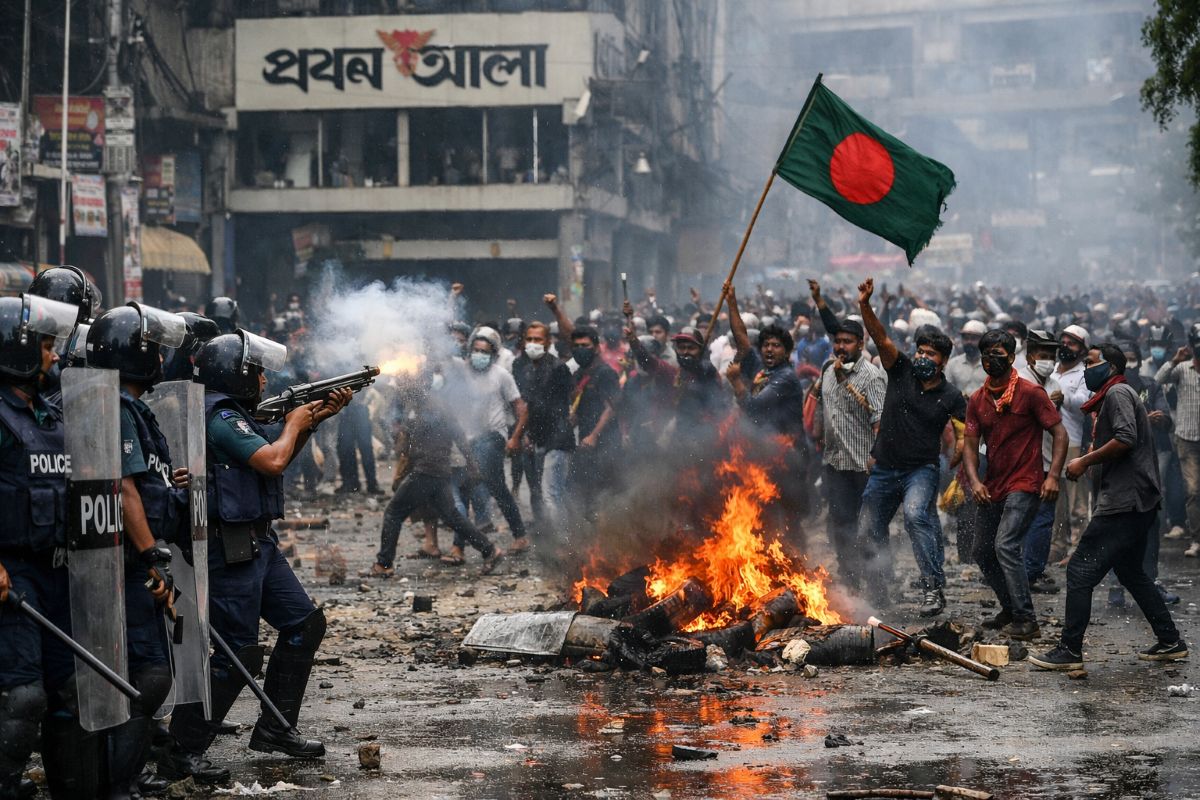
In Dhaka, key intersections including Shahbagh and parts of central districts were temporarily shut down as protesters erected barricades using logs, tires, and makeshift materials. Public transport was disrupted in several areas, while businesses and educational institutions closed early amid safety concerns.
Witnesses reported clashes between protesters and law enforcement in some locations, with police using batons and tear gas to disperse crowds. Protest leaders, however, insisted that demonstrations would continue until those responsible for the killing are identified and brought to justice.
Background of the Student Leader
Sharif Osman Hadi was known as a prominent student activist who had been involved in organizing protests and speaking out on political and social issues. Supporters describe him as a vocal advocate for student rights and democratic reforms, while authorities have not publicly commented in detail on his political role.
According to statements from his family and colleagues, Hadi was shot under circumstances that remain under investigation. He was later transferred to Singapore for advanced medical treatment, where he succumbed to his injuries.
The lack of clarity surrounding the shooting has fueled speculation and anger among supporters, many of whom allege foul play and accuse authorities of failing to protect political activists.
Heightened Security Measures
In response to the unrest, the government has significantly increased security across the country. Police and paramilitary units have been deployed in sensitive areas, particularly around government buildings, media offices, and major transport hubs.
Officials said the measures were necessary to maintain law and order and to prevent damage to public and private property. Security checkpoints were set up in several districts, and patrols were intensified overnight in parts of Dhaka.
Authorities have also warned against vandalism and violence, urging protesters to remain peaceful. However, critics argue that the heavy security presence risks escalating tensions rather than calming the situation.
Attacks on Property and Media Offices
As protests intensified, reports emerged of damage to property in some areas. In Dhaka, groups of demonstrators reportedly targeted political offices and media establishments, accusing certain outlets of biased reporting or silence over the activist’s death.
Journalists’ organizations expressed concern over attacks on media institutions, warning that press freedom could be threatened amid the unrest. Several reporters said they were forced to evacuate offices temporarily as crowds gathered nearby.
Human rights groups have called on all sides to respect freedom of expression and ensure the safety of journalists covering the protests.
Government and Political Reactions
The government has expressed regret over the loss of life and said an investigation into the shooting is ongoing. Officials stated that no one would be spared if found guilty, and urged citizens to allow legal processes to take their course.
Opposition political parties, meanwhile, blamed the authorities for what they described as a deteriorating security situation and demanded an independent inquiry. Some opposition leaders called for nationwide strikes and further demonstrations if justice is not delivered promptly.
Political analysts say the death has become a rallying point for broader discontent, particularly among students and young activists who have previously played a significant role in mass movements in Bangladesh.
International Attention and Concerns
The unrest has drawn attention from international observers and rights organizations, who are closely monitoring developments. Some groups have urged restraint, calling on both protesters and security forces to avoid violence and respect human rights.
Diplomatic sources said foreign missions in Dhaka have advised their citizens to avoid large gatherings and remain cautious amid the volatile situation.
Analysts note that Bangladesh has experienced periods of political unrest in the past, often triggered by high-profile deaths or allegations of abuse. The current protests, however, come at a time of heightened sensitivity, raising concerns about potential long-term instability if tensions are not addressed.
Public Sentiment and Uncertain Outlook
On the streets, emotions remain high. Many protesters described Hadi’s death as symbolic of deeper issues related to governance, accountability, and political freedom. Candlelight vigils and memorial gatherings have been held in several cities, reflecting both grief and anger.
Residents not involved in the protests expressed concern over safety and economic disruption. Shopkeepers reported losses due to closures, while commuters faced difficulties navigating blocked roads.
As of now, there is no clear indication of when the protests might subside. Organizers have vowed to continue demonstrations until they see tangible progress in the investigation, while authorities maintain that stability must be restored.
Conclusion
The death of Sharif Osman Hadi has emerged as a flashpoint in Bangladesh’s political landscape, triggering nationwide unrest and exposing deep divisions within society. With protests continuing, security tightened, and investigations underway, the coming days are likely to be critical in determining whether the country can navigate the crisis peacefully.
Much will depend on the credibility and transparency of the official inquiry, as well as the willingness of all sides to engage without resorting to violence. For now, Bangladesh remains on edge, watching closely as events unfold.
