
Bangladesh and South Korea Strengthen Economic Partnership with New Investment Plans
Bangladesh and South Korea are moving towards a broader economic relationship as both countries explore new opportunities in trade, investment and industrial development. Following the conclusion of negotiations on a Comprehensive Economic Partnership Agreement (CEPA), the two governments have agreed to establish a joint working group involving government agencies and private-sector representatives.
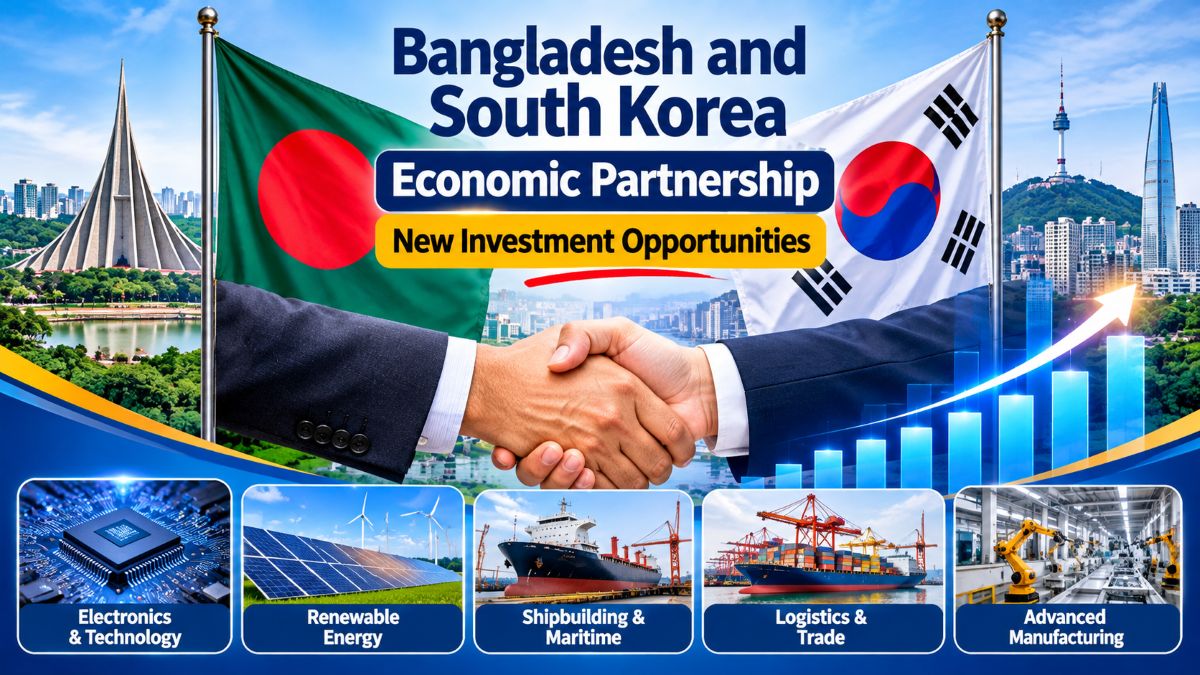
The proposed initiative aims to identify investment opportunities, address business concerns and strengthen cooperation across several industries. Beyond the traditional textile and garment sector, discussions are now expanding into electronics, artificial intelligence (AI), renewable energy, shipbuilding, logistics and advanced manufacturing.
The development could create new opportunities for Bangladeshi businesses while encouraging South Korean companies to explore the country’s growing industrial and consumer markets.
Bangladesh and South Korea Agree to Establish a Joint Working Group
The decision followed a bilateral meeting in Seoul between Bangladesh Finance and Planning Minister Amir Khosru Mahmud Chowdhury and South Korean Trade Minister Jung-sung Park.
Both countries agreed to establish a working group consisting of relevant government agencies and chambers of commerce. The group will focus on identifying priority investment projects, improving business conditions and resolving concerns raised by companies operating in both markets.
Public-private partnerships (PPPs) are also expected to play an important role in developing infrastructure, energy and other strategic projects.
The proposed platform could help businesses communicate directly with policymakers and identify practical solutions to investment-related challenges.
CEPA Negotiations Open the Door to Broader Trade Opportunities
The conclusion of CEPA negotiations represents an important development in the economic relationship between Bangladesh and South Korea.
For many years, bilateral cooperation has been strongly associated with Bangladesh’s textile and garment industries. However, both countries are now interested in developing a more diversified relationship involving technology, manufacturing and modern industrial services.
A broader trade framework could create opportunities for businesses to explore new markets, develop commercial partnerships and strengthen supply chain connections.
Bangladesh is also seeking to expand its industrial capabilities and reduce excessive dependence on a limited number of export sectors.
However, the practical benefits will depend on the final agreement, its implementation arrangements and the policies adopted by both governments.
Samsung Electronics Discussions Highlight Technology Opportunities
Electronics and advanced technology are among the most promising areas of potential cooperation.
During the Seoul visit, the Bangladeshi delegation met Samsung Electronics President Kim Woo-june and senior company officials. Discussions focused on electronics manufacturing, artificial intelligence, digital connectivity and workforce development.
Bangladesh’s Finance and Planning Minister encouraged the company to consider expanding its operations and introducing advanced technology solutions in the country.
Samsung expressed interest in exploring greater cooperation.
Potential opportunities could include electronics manufacturing, component assembly, technical training and industrial technology development.
Such cooperation could help Bangladesh strengthen its manufacturing capabilities and create employment opportunities for skilled workers.
However, developing a competitive electronics industry will require reliable infrastructure, skilled labour, technology transfer and a supportive business environment.
Hyundai Glovis Explores Logistics and Port Development
Modern logistics infrastructure is essential for international trade, manufacturing and export growth.
The Bangladeshi delegation also held discussions with Hyundai Glovis President Lee Kyu-bok and senior officials about logistics, port development and the automotive sector.
The discussions covered several potential areas:
- Development of modern logistics hubs.
- Port infrastructure and operational improvements.
- Automotive supply chains.
- Economic and free trade zones.
- Smart logistics and transportation technology.
Hyundai Glovis expressed interest in exploring business opportunities in Bangladesh. Both sides agreed to establish working-level teams to advance potential cooperation.
Improved logistics systems could help businesses reduce transportation delays, improve supply chain management and strengthen the movement of goods between factories, ports and international markets.
These improvements could become particularly important as Bangladesh seeks to attract more export-oriented manufacturing investment.
Hanwha Ocean Sees Potential in Shipbuilding and Maritime Industries
Shipbuilding and maritime infrastructure represent another important area of potential cooperation.
The Bangladeshi delegation met Hanwha Ocean representatives to discuss shipbuilding, ship repair, dry-docking, maritime infrastructure and floating storage and regasification unit (FSRU) projects.
The company proposed a phased approach to future cooperation.
The initial stage could focus on ship repair, maintenance and retrofitting. More advanced shipbuilding activities could be considered as technical capabilities and industrial infrastructure develop.
This approach could allow Bangladesh to gradually strengthen its maritime industry while building technical expertise.
The country’s geographic position and growing maritime trade requirements create opportunities for investment in port services, vessel maintenance and supporting industries.
However, the success of these projects will depend on technical assessments, commercial viability and long-term investment commitments.
Renewable Energy and Artificial Intelligence Could Drive Future Growth
Renewable energy and artificial intelligence are becoming increasingly important to modern industrial development.
Both sectors were identified as promising areas for cooperation between Bangladesh and South Korea.
Investment in renewable energy could help diversify electricity generation and support businesses seeking more sustainable energy solutions.
Meanwhile, artificial intelligence could improve manufacturing processes, logistics operations, digital services and business productivity.
South Korean companies could potentially contribute through technology partnerships, research cooperation, training programmes and digital infrastructure development.
For Bangladesh, developing local technical skills will be essential to ensuring that international cooperation creates long-term economic value.
Bangladesh Introduces Measures to Attract Foreign Investment
International investors generally consider regulatory transparency, infrastructure quality and business conditions before making major investment decisions.
During the bilateral discussions, Bangladesh outlined several initiatives intended to improve its investment environment.
These included:
- Digitalisation and automation of capital repatriation procedures.
- Reducing customs duties on raw materials for electronics from 26 percent to zero.
- Streamlining customs and port procedures.
- Encouraging government-to-government investment cooperation.
- Expanding public-private partnerships for strategic projects.
These measures could make business operations more efficient and help address some of the challenges faced by international companies.
However, consistent implementation will be essential. Investors need predictable regulations, efficient administrative services and reliable infrastructure to support long-term operations.
Potential Economic Benefits for Bangladesh
Stronger cooperation with South Korea could create several opportunities for Bangladesh’s economy.
Industrial Diversification
Investment in electronics, shipbuilding, renewable energy and advanced manufacturing could help Bangladesh expand beyond its traditional export industries.
Employment Opportunities
New manufacturing facilities and technology-based businesses could increase demand for engineers, technicians, logistics professionals and skilled industrial workers.
Technology Transfer
Cooperation with established South Korean companies could introduce modern production systems, advanced equipment and technical expertise.
Export Development
Greater integration into international supply chains could help local businesses explore new markets and diversify their export products.
Infrastructure Development
Investment in logistics, ports, maritime facilities and energy projects could strengthen the country’s industrial infrastructure.
These are potential benefits rather than guaranteed outcomes. Their actual impact will depend on investment commitments, project implementation and the ability of local businesses to participate in new industrial activities.
Challenges That Could Affect Future Investment
Despite the positive developments, several challenges could influence the success of the proposed cooperation.
Regulatory complexity, infrastructure limitations, administrative delays and business concerns remain important issues for international investors.
During the meeting, South Korea’s Trade Minister raised concerns involving Korean companies operating in Bangladesh. The Korean side agreed to share a consolidated list of these issues for consideration and follow-up.
Addressing these concerns will be important for maintaining investor confidence.
Bangladesh will also need to strengthen technical education, improve industrial infrastructure and ensure that investment policies remain consistent.
Successful international partnerships require cooperation between government agencies, private companies, financial institutions and local industries.
What Comes Next for Bangladesh and South Korea?
The proposed joint working group represents an important step towards turning bilateral discussions into practical investment opportunities.
The next stage will involve identifying priority projects, addressing business concerns and developing working-level cooperation with interested companies.
Further discussions involving Samsung Electronics, Hyundai Glovis and Hanwha Ocean could help clarify potential commercial and technical opportunities in their respective industries.
For Bangladesh, the main objective should be to attract investment that creates long-term industrial value rather than focusing only on short-term capital inflows.
Technology transfer, workforce development, export diversification and stronger local supply chains will be important measures of success.
Readers interested in more international business developments, economic updates and investment news can visit TimesScopeJournal.
Final Outlook
Bangladesh and South Korea have an opportunity to build a broader economic relationship based on trade, technology, investment and industrial cooperation.
The proposed working group could provide a platform for identifying projects and addressing business concerns, while discussions with major South Korean companies highlight potential opportunities in electronics, logistics and maritime industries.
However, the real impact will depend on effective implementation, investor confidence and the ability of both countries to turn discussions into measurable commercial outcomes.
If both governments maintain momentum and create a supportive environment for businesses, this cooperation could contribute to Bangladesh’s long-term industrial development and strengthen its position in international trade.
