


South Koreas Trading Esports Revolution: When Crypto Meets Competition
In South Korea, crypto trading has evolved far beyond charts and candlesticks — it’s becoming a full-blown spectator sport. What once happened quietly behind screens is now happening under spotlights, complete with cheering crowds, commentators, and prize pools.
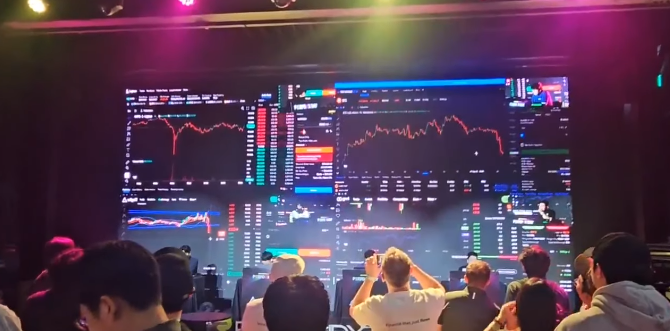
Events like Perp-DEX Day and Korea Blockchain Week have transformed digital finance into something that looks and feels like esports. Traders battle in real-time, showcasing skill, strategy, and nerves of steel — all while the audience watches their profits and losses unfold live on giant screens.
At the same time, regulators, exchanges, and esports organizations are racing to define what this new fusion of finance and gaming means for South Korea’s fast-moving digital economy.
Executive Summary / TL;DR
- South Korea is emerging as a global hub for “trading esports”, where crypto trading competitions take center stage at major blockchain events.
- Perp-DEX Day and Korea Blockchain Week featured live trading tournaments that blended professional trading with gaming-style production.
- Major esports organizations, such as LCK (League of Legends Champions Korea), have partnered with crypto exchange Upbit, signaling mainstream acceptance.
- Regulators have responded with stronger anti-money laundering (AML) actions and record enforcement efforts to monitor the growing crypto sector.
- The trend reflects South Korea’s unique mix of gaming culture, high-tech infrastructure, and passion for innovation — but also raises questions about risk, regulation, and responsibility.
Why South Korea?
A Nation That Trades and Plays
South Korea is a country where digital engagement runs deep. The same energy that turned online gaming into an international phenomenon is now fueling its interest in digital assets.
Retail investors make up a huge portion of Korea’s trading volume. Many citizens have experience with stocks, futures, and now crypto. Combine this with the country’s world-class esports infrastructure, and you get a nation that naturally merges competition with trading.
Tech-Savvy and Fast-Connected
Nearly every South Korean adult owns a smartphone, and high-speed internet is everywhere — perfect conditions for active crypto markets and live online trading shows. The population is also younger on average than many developed countries, with digital literacy and gaming enthusiasm shaping how financial technology evolves.
Cultural Roots in Esports
Esports isn’t just entertainment in Korea — it’s a national pride. Professional gaming leagues, celebrity players, and televised matches have made competitive gaming a serious industry.
Now, “trading esports” is emerging as a natural evolution — turning investing into another form of digital performance art.
What Is “Trading as Esports”?
The Concept
Trading as esports transforms crypto markets into competitive live events. Participants trade real or simulated assets under pressure while audiences watch their decisions unfold on screens.
Commentators analyze strategies, risk management, and profit margins — much like sportscasters do during traditional games. The audience sees not just who wins but how they win.
The Formats
These events come in multiple styles:
- Live trading battles: Traders compete in real time on decentralized exchanges, showing open positions, liquidations, and total profits.
- Prop-trading tournaments: Firms provide traders with capital to test skill and discipline. The best performers win bonuses or sponsorships.
- Gamified simulators: Platforms use mock accounts or tokens to let anyone experience the thrill of high-stakes trading without real risk.
Each event features commentators, on-screen data, and audience engagement tools — turning complex trading into accessible entertainment.
The Experience
A typical “trading match” feels like a mix of esports and stock trading TV shows. There’s an arena-like setup, flashy visuals, and live market feeds. The top traders are introduced like pro gamers, with profiles, nicknames, and even signature strategies.
Fans can cheer, bet on winners (where allowed), or follow real-time performance dashboards. It’s fast, visual, and emotionally charged — everything modern audiences love.
Major Recent Events and Proof Points
Perp-DEX Day and Korea Blockchain Week
Two major events — Perp-DEX Day and Korea Blockchain Week — brought trading esports into the spotlight.
At these events, professional traders faced off in front of live audiences, competing for prizes and recognition. Huge LED screens displayed charts and order books, while commentators broke down moves as they happened.
The atmosphere felt less like a financial conference and more like an esports championship — complete with fan cheers, sponsor banners, and stage lighting.
The success of these events showed that crypto trading could entertain, educate, and engage — turning what’s usually solitary into something shared and thrilling.
Mainstream Media Attention
These trading competitions have begun catching mainstream attention. Financial outlets and blockchain media alike are starting to cover trading tournaments, treating top traders like esports stars.
Streaming platforms are also joining in, offering live broadcasts and interactive features for global viewers.
Prop-Trading Competitions and Controversy
Some events, however, have drawn debate. Certain tournaments branded themselves with edgy names or “criminal trading” themes, raising questions about risk perception and financial responsibility.
While they attract attention and participation, critics argue that this gamification of trading could encourage reckless behavior — especially among young or inexperienced audiences.
Still, interest continues to rise, with more prop firms and decentralized exchanges sponsoring global competitions inspired by Korea’s lead.
Corporate & Esports Partnerships
The LCK + Upbit Deal
One of the most eye-catching developments was the partnership between LCK (League of Legends Champions Korea) — one of the world’s most-watched esports leagues — and Upbit, South Korea’s largest crypto exchange.
This collaboration introduced crypto branding into mainstream esports broadcasts and live events, marking a cultural crossover between trading and gaming.
For Upbit, the move was a marketing masterstroke — connecting its exchange to millions of young, tech-savvy viewers who already understand digital competition. For esports fans, it blurred the line between gaming and finance even further.
Why This Matters
This partnership signals a new era: crypto platforms are no longer niche financial services — they’re entertainment brands.
By entering esports, exchanges are positioning themselves at the center of digital culture. This helps normalize crypto, attract new traders, and boost brand loyalty among the next generation.
Global Context
This isn’t happening in isolation. Worldwide, crypto exchanges have sponsored sports teams, streamers, and gaming events — but South Korea is leading by integrating trading directly into the esports ecosystem itself.
It’s a model that other regions are watching closely, especially as markets look for creative ways to engage younger audiences in finance.
Market Mechanics — Why It’s Exciting to Watch
Fast, Risky, and Dramatic
The excitement in trading esports comes from one thing — volatility. Crypto markets move fast, and that makes live trading unpredictable and thrilling.
Unlike traditional stock markets that close each day, crypto trades 24/7. Traders can see their profits swing dramatically in minutes. That tension — combined with public visibility — makes for high-adrenaline viewing.
The Core Mechanics
- Perpetual futures trading: The most popular format, allowing traders to use leverage for big gains (or losses).
- Margin battles: Contestants amplify positions, competing for maximum percentage returns within set time limits.
- Real-time leaderboards: Audiences see rankings update instantly as prices move.
For viewers, it’s part reality show, part financial education — and part pure entertainment.
The Risk Factor
Of course, the same features that make trading esports exciting also make them risky.
High leverage and unpredictable price swings mean that even professionals can face losses in seconds.
Critics worry that watching traders “win big” could glamorize speculative behavior — something regulators and exchanges must manage carefully.
Regulation, Risks & Enforcement
A Government Keeping a Close Eye
South Korea has been tightening its crypto regulations in recent years. Authorities now monitor cross-border crypto flows, enforce anti-money laundering (AML) laws, and scrutinize exchange operations more closely than ever.
This push for oversight followed a record spike in suspicious crypto transaction reports and a surge in asset seizures from tax evaders and illegal traders. Regulators are determined to ensure that innovation in digital assets doesn’t lead to exploitation or market abuse.
Stablecoins and Financial Policy
Another ongoing discussion involves stablecoins — digital assets tied to traditional currencies. The Bank of Korea has expressed concern about their impact on monetary stability, especially as crypto becomes more common in local payments and investments.
The central bank and financial authorities are now working together to define clear frameworks for stablecoin use and issuance, ensuring balance between innovation and safety.
Protecting the Public
While the trading-esports phenomenon is new, regulators are already asking important questions:
- How do we prevent manipulation or “rigged” results?
- Should minors be allowed to watch or participate?
- What happens if a live event encourages high-risk behavior?
To address these, organizers are starting to introduce safeguards — like using simulated trading for certain competitions, limiting leverage, and enforcing participant verification.
Enforcement on the Rise
Government agencies have stepped up enforcement, investigating tax evasion through crypto and introducing new systems to trace digital assets. The message is clear: South Korea welcomes innovation but not at the cost of integrity or consumer safety.
The Road Ahead
South Korea’s experiment with turning crypto trading into entertainment is changing how the world sees finance. It merges the excitement of gaming, the strategy of investing, and the storytelling of competition — all powered by real markets.
The challenge will be to balance innovation with responsibility. As the line between gaming and finance blurs, education and regulation must evolve too.
If managed wisely, trading esports could become one of the most influential bridges between digital culture and global finance — and South Korea will be the country that built it first.
The Future of Digital Competition
Economic and Market Impact
South Korea’s transformation of trading into an esports-style experience is not just cultural — it’s economic. In the short term, the rise of trading tournaments and crypto partnerships has created new revenue streams and massive brand visibility. Crypto exchanges, fintech startups, and even gaming organizations are investing in these events because they attract a young, digital-native audience that values both technology and competition.
Sponsorships for live trading events have surged, with major exchanges funding production, prizes, and partnerships with esports organizations. These collaborations have turned financial platforms into entertainment brands. The result? Exchanges like Upbit are no longer viewed as just trading tools — they are lifestyle brands embedded in the youth market.
For the esports industry, these deals open the door to diversification. Traditional gaming sponsorships can now be complemented by fintech and crypto partnerships, bringing in fresh investment and audiences. Esports arenas that once hosted League of Legends or StarCraft championships may soon host live “trader battles” with just as much excitement.
In the medium to long term, this movement could reshape South Korea’s role in the global crypto economy. If successful, it could attract capital inflows from both investors and foreign firms looking to replicate Korea’s innovation model. However, regulatory tightening — especially around stablecoins and cross-border trading — could also push some activity offshore.
The Bank of Korea’s focus on digital asset regulation suggests that policymakers want to harness innovation without compromising financial stability. If managed correctly, Korea could lead a new global trend — where fintech, entertainment, and investment merge into a powerful economic ecosystem.
Human Stories Behind the Screens
At the heart of every trading esports event are the people — traders, fans, organizers, and regulators — who bring it to life. Their stories reveal the mix of ambition, risk, and creativity shaping this new frontier.
The Trader: One young trader from Seoul, who competed in a recent Perp-DEX tournament, described the event as “adrenaline with a purpose.” He prepared for weeks, studying technical analysis and risk management like an athlete trains for a game. “Trading in front of people isn’t easy,” he said. “You need discipline, focus, and a cool head when markets move fast.” His goal wasn’t just to win money but to prove that trading can be a skill-based sport, not just speculation.
The Esports Executive: A representative from a leading esports organization explained why they embraced crypto partnerships. “It’s a cultural match,” she said. “Gamers understand digital assets — they live in digital economies. This partnership allows us to expand our audience and offer new experiences that blend gaming and finance.”
The Regulator: A government compliance officer noted the growing challenge of balancing innovation with consumer safety. “We support progress,” he said, “but we must ensure transparency and protect investors from the risks of unregulated speculation.” His department has been increasing monitoring of exchanges, ensuring all platforms follow strict anti-money laundering protocols.
The Viewer: Among the crowd at one event was a 22-year-old university student who follows both esports and crypto trading. “It’s exciting,” she said. “You can watch people trade live and learn at the same time. It makes finance feel less boring and more real.” For many in her generation, watching traders compete is educational — a new form of digital literacy that blends entertainment and economics.
These human stories highlight how deeply trading esports is resonating across generations and professions — from regulators in suits to young fans in gaming jerseys.
Ethical and Societal Questions
As with any major innovation, trading esports raises tough ethical questions. The idea of turning financial risk into entertainment sparks debates about responsibility, especially when young audiences are involved.
One concern is whether gamifying trading encourages risky behavior. Watching traders make — or lose — thousands of dollars in minutes could send the wrong message to inexperienced investors. For some viewers, it’s educational. For others, it may glamorize volatility.
Another issue is youth exposure. With esports audiences skewing young, regulators are questioning whether minors should be targeted by crypto-related advertising or sponsorships. Exchanges must ensure clear disclaimers and responsible messaging, much like gambling or investment services in traditional media.
There’s also the question of corporate ethics. Are exchanges and event organizers doing enough to protect participants from excessive risk? Many are introducing limits on leverage, safety checks, and risk simulations for beginners. Some tournaments use virtual tokens or “paper trading” to remove real-money exposure.
Ultimately, the conversation isn’t about stopping innovation — it’s about making sure it evolves responsibly. Just as online gaming learned to set age limits and promote fair play, trading esports must build a foundation of ethical standards that protect both players and spectators.
What Industry Stakeholders Are Saying
Industry leaders across crypto, esports, and finance are offering their perspectives on South Korea’s trading esports boom — and most agree that it’s just the beginning.
A spokesperson for Upbit explained that their sponsorship of esports is part of a broader mission to “make crypto more approachable and engaging.” They see gaming partnerships as a bridge between finance and culture — a way to make digital assets feel familiar rather than intimidating.
Event organizers from Korea Blockchain Week and Perp-DEX Day have said their goal is to create “a community experience around finance.” They believe that by hosting live events, they can encourage healthy competition, transparency, and education — showing that trading can be both exciting and responsible.
From the regulatory side, analysts stress the need for balance. They acknowledge that South Korea’s leadership in crypto innovation is impressive but warn that oversight must keep pace. Stricter anti-money laundering enforcement, transaction monitoring, and exchange transparency will be key to sustaining credibility in this fast-moving sector.
As one industry insider put it, “Korea is proving that crypto can be cultural, not just financial — but it must also be accountable.”
Data and Visuals That Tell the Story
The evolution of trading esports is backed by clear data. The number of suspicious crypto transactions flagged by Korean authorities has reached record highs, reflecting both the growth of the industry and the government’s commitment to oversight.
Meanwhile, viewership metrics for crypto-trading livestreams are climbing. Online platforms are reporting increasing engagement, especially among 18–35-year-olds — the same demographic driving Korea’s gaming and crypto markets.
A timeline infographic could easily show how quickly the landscape evolved:
- 2022: Upbit partners with LCK.
- 2023: Perp-DEX Day and KBW introduce live trading battles.
- 2024–2025: Stronger AML enforcement, regulatory debates on stablecoins, and growing audience participation.
These milestones show how South Korea has managed to blend innovation and regulation in real time — turning trading into a new form of national entertainment.
Possible Sub-Stories and Sidebars
How Prop-Trading Tournaments Work:
These contests are not random luck. Participants must follow strict rules — time limits, position caps, and risk parameters. Winners are not just lucky traders but skilled strategists who balance aggression and caution under pressure.
The AML Story:
South Korea’s financial watchdogs have stepped up technology-driven monitoring, using AI and blockchain analytics to track suspicious activity. Their efforts aim to prevent crypto misuse while encouraging legitimate growth.
Stablecoins and the Korean Won:
One of the biggest policy debates in South Korea is whether stablecoins could threaten the stability of the national currency. Lawmakers are evaluating how to integrate stablecoin regulation without stifling innovation — a balancing act that could influence other global markets.
Conclusion and Outlook
South Korea’s trading esports movement sits at the crossroads of innovation, entertainment, and finance. It captures the country’s love for competition, its embrace of digital technology, and its fearless approach to cultural reinvention.
But this new world also comes with tension. On one side, there’s the excitement of global recognition, fresh revenue, and social engagement. On the other, there’s the caution of regulators who see potential for misuse, speculation, and risk to public welfare.
Looking ahead, three possible futures emerge:
- Sustainable Growth: Regulation and innovation find balance, turning Korea into a global model for responsible trading entertainment.
- Regulatory Crackdown: Excess risk or poor safeguards could prompt stricter rules, pushing some events offshore.
- Cultural Normalization: Trading esports becomes a niche but stable part of the entertainment industry, much like poker tournaments or fantasy sports.
The next major milestones will reveal which path Korea takes — from upcoming policy votes to future Korea Blockchain Week events and new partnerships between esports and crypto exchanges.
Either way, South Korea has already redefined what it means to merge finance and fun — showing the world that even markets can become arenas.
FAQs
What is the economic benefit of trading esports?
It generates sponsorship revenue, creates new audiences for exchanges, and boosts Korea’s position as a digital finance leader.
Who participates in these trading tournaments?
Both professional traders and skilled amateurs compete. Many have financial or gaming backgrounds and treat it as both a challenge and a learning experience.
Is trading esports safe for viewers and participants?
Yes, when proper safeguards are in place. Some tournaments use virtual trading systems, while others limit leverage and enforce risk controls.
What are regulators doing about crypto trading in Korea?
They’re increasing oversight, monitoring cross-border transactions, and introducing stricter anti-money laundering standards to ensure transparency.
Will this trend spread globally?
Very likely. Countries with active gaming and crypto communities are already exploring similar events inspired by Korea’s model.
