


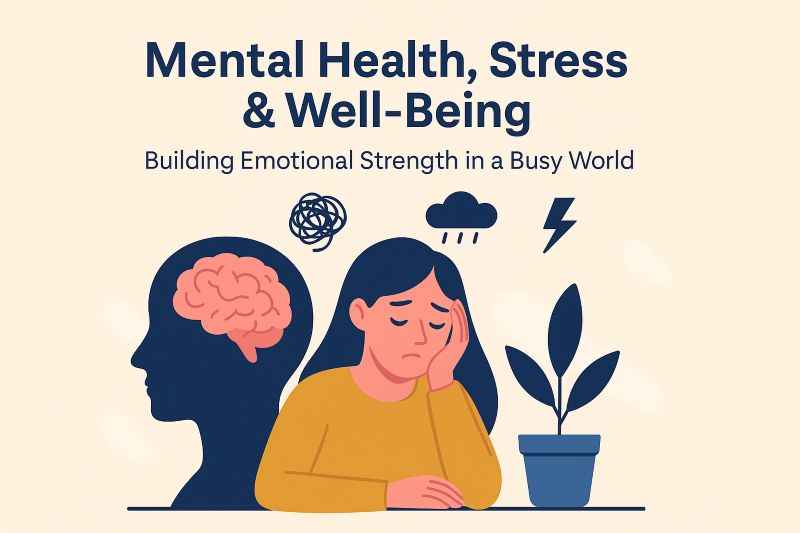
Mental Health, Stress & Well-Being: Building Emotional Strength in a Busy World
In today’s fast-paced world, mental health is no longer a side topic — it’s a global priority. More people, especially the younger generation, are struggling with stress, anxiety, and burnout than ever before. Long work hours, digital overload, constant comparison on social media, and lack of real rest have made emotional exhaustion common.
But the good news is, awareness is rising. Talking about mental health is becoming normal, and more people are learning how to take care of their emotional well-being just as they do their physical health. This article explores what mental wellness really means, why stress is affecting so many, and how to build resilience in a demanding world.
What Is Mental Health?
Mental health refers to how we think, feel, and behave in daily life. It influences how we handle stress, relate to others, and make decisions. Good mental health doesn’t mean always being happy — it means having the ability to manage challenges, recover from setbacks, and enjoy meaningful connections.
Our mental state constantly changes based on life situations, relationships, sleep, nutrition, and even environment. Just like the body, the mind needs rest, nourishment, and care to function at its best.
The Rising Pressure on Modern Minds
1. The Fast Life and Constant Connectivity
Technology has connected the world but also made it hard to disconnect. Notifications, work messages, and social media never stop. This constant stimulation keeps our minds active even when we should be resting. The result? Mental fatigue and poor focus.
2. Social Media Comparison
Scrolling through social media can inspire, but it also creates invisible pressure. People compare their lives, looks, and achievements to highlight reels of others. This can lower self-esteem and cause anxiety, especially among teens and young adults.
3. The Achievement Trap
Many people today link self-worth with success — grades, jobs, or income. When goals are not met, it can lead to frustration, guilt, or burnout. The “always busy” culture glorifies exhaustion and leaves little time for rest or reflection.
4. Uncertain Future
From global crises to job insecurity, the modern world feels unpredictable. This sense of uncertainty feeds chronic stress, leaving people anxious even when nothing specific is wrong.
Understanding Stress and Its Impact
Stress is the body’s natural reaction to pressure or threat. In small doses, it helps us stay alert and motivated. But when stress becomes constant, it starts damaging the body and mind.
Physical Effects of Chronic Stress
-
Headaches, muscle tension, or fatigue
-
Sleep problems and weakened immunity
-
Stomach issues or appetite changes
-
Increased risk of heart disease and high blood pressure
Emotional and Mental Effects
-
Irritability or anger
-
Anxiety or panic attacks
-
Difficulty concentrating
-
Emotional numbness or sadness
Stress hormones like cortisol and adrenaline, when continuously released, keep the body in “fight or flight” mode. Over time, this drains energy and causes burnout — a state of total physical, emotional, and mental exhaustion.
Burnout — When Stress Crosses the Line
Burnout is not just tiredness; it’s a deep sense of emptiness and detachment. It happens when long-term stress goes unmanaged.
Common signs include:
-
Feeling constantly drained or unmotivated
-
Losing interest in work or hobbies
-
Neglecting self-care and social life
-
Feeling hopeless, cynical, or emotionally flat
Burnout often affects high achievers — people who give 100% all the time but forget to refill their own tank. Recognizing it early is key to recovery.
The Role of Emotional Resilience
What Is Emotional Resilience?
Emotional resilience is the ability to adapt and bounce back from challenges. It doesn’t mean you never feel stress or sadness — it means you can recover faster and keep moving forward.
Traits of Emotionally Resilient People
-
They accept what they can’t control.
-
They express emotions instead of hiding them.
-
They maintain perspective during tough times.
-
They ask for help when needed.
Resilience is like a muscle — the more you practice it, the stronger it becomes.
Mental Health in Younger Generations
Younger people today face unique pressures. Academic competition, social media exposure, and career uncertainty create constant mental strain. At the same time, younger generations are more open about mental health, which is a positive change.
Many schools and workplaces are now including wellness programs, mindfulness sessions, and counseling services. However, stigma still exists — especially in cultures where emotional struggles are seen as weakness. Breaking that mindset is the first step toward healing.
Building Better Mental Health
1. Recognize and Accept Your Feelings
It’s normal to feel sad, stressed, or anxious sometimes. Instead of ignoring these emotions, acknowledge them. Labeling your feelings helps reduce their power and gives you space to respond calmly.
2. Practice Mindfulness
Mindfulness means being present — focusing on what’s happening now instead of worrying about the past or future. Simple breathing exercises or five-minute meditations can reduce anxiety and help you refocus.
3. Get Enough Sleep
Sleep is vital for mental health. Lack of rest increases irritability and weakens emotional control. Aim for 7–8 hours per night, and limit screens at least 30 minutes before bedtime.
4. Stay Physically Active
Exercise releases endorphins, the body’s natural mood boosters. Even a 20-minute walk can lower stress and improve focus.
5. Eat a Balanced Diet
What you eat affects how you feel. A diet rich in fruits, vegetables, and whole grains supports better brain function and energy levels. Avoid too much caffeine, sugar, or alcohol — they can worsen anxiety.
6. Connect with People
Talking to friends, family, or counselors helps you process emotions. Sharing what you’re going through doesn’t make you weak — it builds support and connection.
7. Set Boundaries
You don’t have to say yes to everything. Learning to say “no” protects your mental space. Set clear limits with work, social media, and people who drain your energy.
8. Take Breaks
Regular rest is not laziness — it’s essential. Step away from your desk, go outside, or take a weekend off. Rest recharges creativity and prevents burnout.
Mental Health at Work
The Cost of Ignoring Mental Health
Workplace stress affects productivity, motivation, and employee retention. Ignoring mental health leads to higher absenteeism and burnout.
Creating Healthier Work Cultures
-
Encourage open conversations about stress.
-
Offer flexible work hours when possible.
-
Promote breaks and wellness programs.
-
Train managers to recognize emotional fatigue.
Workplaces that value mental well-being build loyal, creative, and more productive teams.
When to Seek Professional Help
Sometimes, stress or sadness may not improve on its own. It’s important to recognize when it’s time to seek help.
You might need professional support if:
-
You feel anxious or hopeless most of the time.
-
You have trouble functioning at work or school.
-
You lose interest in things you used to enjoy.
-
You think about harming yourself.
Therapists, counselors, and psychologists can help you manage emotions, change thought patterns, and develop coping skills. Seeking help is not a sign of weakness — it’s a step toward recovery and self-respect.
The Power of Self-Compassion
Self-compassion means treating yourself with the same kindness you offer others. Many people are harsh critics of themselves, blaming their emotions or mistakes. Instead, remind yourself that being human includes imperfection.
Simple ways to practice self-compassion:
-
Speak to yourself gently when you fail.
-
Celebrate small wins, not just big ones.
-
Avoid comparing your progress with others.
The more you treat yourself kindly, the easier it becomes to heal and grow.
The Future of Mental Health Awareness
Awareness around mental health is growing globally. Schools, companies, and governments are investing in wellness programs. Mobile apps, therapy platforms, and online communities are making mental health care more accessible.
But true progress requires cultural change — understanding that mental well-being is as important as physical health. Talking openly, supporting others, and breaking stigma will create a future where no one suffers in silence.
Final Thoughts
Your mental health is your foundation. When your mind is well, your life feels balanced, your relationships grow stronger, and challenges become manageable.
Taking care of your mental wellness doesn’t mean eliminating stress — it means learning how to manage it with strength and awareness. Simple daily habits like good sleep, healthy food, real connections, and self-reflection can make a huge difference.
Remember: asking for help, taking breaks, and slowing down are not signs of weakness — they’re signs of self-respect.
In a world that constantly tells you to do more, sometimes the most powerful act is to pause, breathe, and take care of your mind.
FAQs
Q1: What does mental health include?
Mental health includes your emotional, psychological, and social well-being — how you think, feel, and act in daily life.
Q2: What is the difference between stress and anxiety?
Stress is usually a short-term response to pressure. Anxiety lasts longer and often continues even after the stressful situation ends.
Q3: How can I manage burnout?
Start by resting, setting clear boundaries, and asking for help. Focus on activities that recharge you instead of draining your energy.
Q4: How do I know if I need professional help?
If you feel sad, anxious, or exhausted for weeks and can’t cope with daily tasks, it’s time to talk to a mental health professional.
Q5: Can lifestyle changes really improve mental health?
Yes. Regular exercise, balanced diet, good sleep, and mindful living have proven effects on emotional well-being and resilience.
