


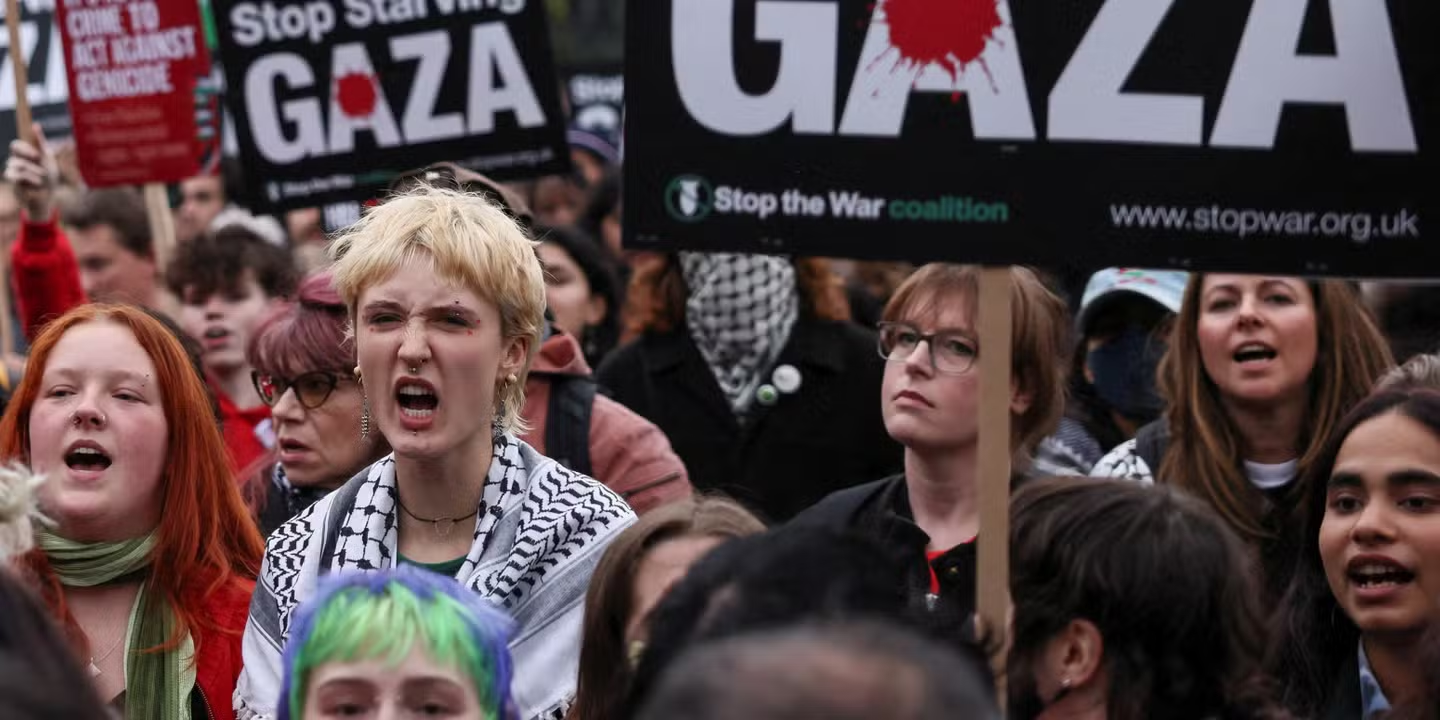
Europe Protests Support Palestine: Mass Demonstrations Against Israeli Actions
In recent days, dozens of cities across Europe have witnessed large protests in support of Palestinians and criticizing Israel’s military operations in Gaza. These demonstrations reflect growing global concern about the conflict and its humanitarian impact. In this article, we explore how the protests unfolded, why people are joining them, what responses they provoke, and what they might mean going forward.
Protest Surge: Where and How Many
In many European capitals, streets have filled with marchers waving Palestinian flags, holding banners, chanting slogans, and demanding immediate action. Cities like Amsterdam, Rome, Madrid, Paris, Berlin, and London have seen huge crowds.
- In Amsterdam, organizers say about 250,000 people took part in a “Red Line” march, dressed in red to symbolize their opposition to the siege on Gaza.
- In Rome, authorities noted 250,000 protesters on a fourth day of demonstrations; some organizers claim the number was far higher.
- In Spain, 92,000 marched in Madrid and 70,000 in Barcelona to protest Israel’s war.
- Meanwhile, Berlin saw around 50,000 join protests calling for an end to the conflict, a halt to German arms exports, and broader European pressure.
These are only a few examples — many smaller cities, university towns, and regional centers also hosted rallies. Some protests marked key anniversaries or responded to recent events like the interception of an aid flotilla bound for Gaza.
Motivations Behind the Movement
Why are so many people across Europe joining these protests? Several overlapping motivations and grievances drive the movement:
Humanitarian Concern
Many protestors are alarmed at the high number of civilian deaths, including women, children, and elderly. They view large-scale military actions in dense urban areas as risky and disproportionate. They call for ceasefires, unhindered humanitarian access, medical relief, and protection for civilians.
Solidarity and Moral Outcry
Some participants see their presence as a moral duty — standing in solidarity with the Palestinian people. They believe that when states appear indifferent to suffering, ordinary citizens must act by speaking out.
Political Pressure
Demonstrators hope to push their governments and the European Union to adopt stronger diplomatic or economic measures against Israel. They demand halts in arms exports, suspension of trade deals, or more vocal condemnation in international forums.
Reaction to Specific Triggers
Recent events, like the interception of the Global Sumud flotilla by Israeli forces, triggered immediate protest waves. The flotilla, carrying humanitarian aid bound for Gaza, drew wide attention when many of its activists were detained.
These triggers amplify existing frustration with what protestors see as inaction or complicity by Western governments.
Methods and Scenes on the Ground
The protests have varied in style, tone, and intensity. Below are some common patterns:
Peaceful Marches and Rallies
Most demonstrations are peaceful: people walk along set routes, listen to speakers, hold vigils, light candles, and form symbolic human chains.
Strikes and Work Stoppages
In Italy, a nationwide general strike brought public services to a near halt. On one strike day, organizers claimed 2 million people across the country joined. Key sectors such as transit, schools, and ports were affected.
Dockworkers in major ports refused to unload Israeli-linked ships in protest.
These actions show how the protests extend beyond just street marches — they aim for economic leverage.
Sit-ins, Occupations, and Campus Actions
In the Netherlands, students at several universities have occupied buildings, held sit-ins, or staged encampments. Their demands often include that their universities sever ties with Israeli academic or research institutions.
Clashes and Tensions
Though many protests are peaceful, tensions sometimes escalate. In some cities, small groups have clashed with police, vandalized property, or attempted to break through barriers. Police have occasionally used tear gas, rubber bullets, or arrests, especially when demonstrations grow larger or more confrontational.
Government Responses and Risks
Governments in Europe have responded in mixed ways — some cautiously supportive of protesters’ demands, some more forceful in limiting or policing protests.
Attempts at Restriction
In Italy, authorities banned a pro-Palestinian demonstration in Bologna over concerns about public order. Despite the ban, organizers signaled they would proceed.
Some cities have deployed large numbers of police, imposed curfews, or designated special protest zones.
Political Balancing Acts
European governments often face competing pressures: domestic public opinion, relations with Israel and the United States, and obligations under international law. As a result, many leaders walk a tightrope — issuing statements condemning civilian suffering while reaffirming Israel’s right to self-defense in limited measure.
Diplomatic Fallout
Protests can influence foreign policy debates. For instance, governments may reconsider arms sales, trade agreements, or diplomatic support. Some have already suspended export licenses for military equipment that could be used in the conflict.
Risks for Protestors and Public Order
Large protests carry risks: stampedes, violence, clashes with police, or infiltration by extremists. In some places, authorities have made mass arrests to prevent escalation. Protesters also face counter-accusations: endorsing extremist ideology, destabilizing society, or encouraging polarization.
Possible Impacts and Future Trajectories
What might these protests achieve? Their real impact depends on sustained mobilization, political receptivity, and global context.
Domestic Political Pressure
In countries heading toward elections, such protests can sway public opinion, shift party platforms, or even reshape alliances. Governments may feel pressure to adopt tougher stances or cut controversial ties.
Shifts in Foreign Policy
If protests persist, governments may adopt stronger measures — such as suspending military trade, backing sanctions, or proposing resolutions in international bodies. They might also move to recognize Palestine more fully or call for independent investigations into alleged war crimes.
Global Solidarity and Momentum
These protests—in many countries simultaneously—help maintain global visibility of the conflict. They connect local movements, civil society groups, and human rights organizations across borders, sustaining media attention and donor support.
Risks of Backlash
Not all consequences will be positive. A strong backlash from political opponents, accusations of antisemitism or extremism, or government crackdowns could dampen momentum. If protests are not well-managed, they risk polarization or loss of public sympathy.
Sustaining the Movement
Protests that last tend to embed themselves into broader activism: labor unions, student radicalism, social justice networks. If organizers build institutional structures—coalitions, communication networks, funding—they can keep the pressure on in the long term.
FAQs
- Why are protests in Europe relevant to a conflict in the Middle East?
Because public opinion in democratic societies can influence policy. Governments are accountable to citizens. Moreover, Europe is closely tied to the region economically, diplomatically, and through migration. Many activists believe silence from Europe would be complicity. - Are these protests always peaceful?
Most are peaceful—marches, vigils, sit-ins. But in some cases, clashes have occurred with police or property damage. A small minority of protestors might engage in radical acts, but that is not the norm. - What do protestors demand?
Common demands include: a ceasefire in Gaza, free movement of humanitarian aid, release of detainees (e.g. flotilla activists), end to arms exports to Israel, and more forceful diplomatic stances from European governments. - Do governments change policy because of protests?
Sometimes. Especially when protests are sustained, widespread, and attract media attention, they can push governments to revise stances, propose laws, or shift foreign policy. But change is not guaranteed. - How can someone support or join peacefully?
One can join local demonstrations, sign petitions, donate to relief organizations, engage in public discussions, contact elected representatives, and help spread awareness — always within legal, peaceful means.
